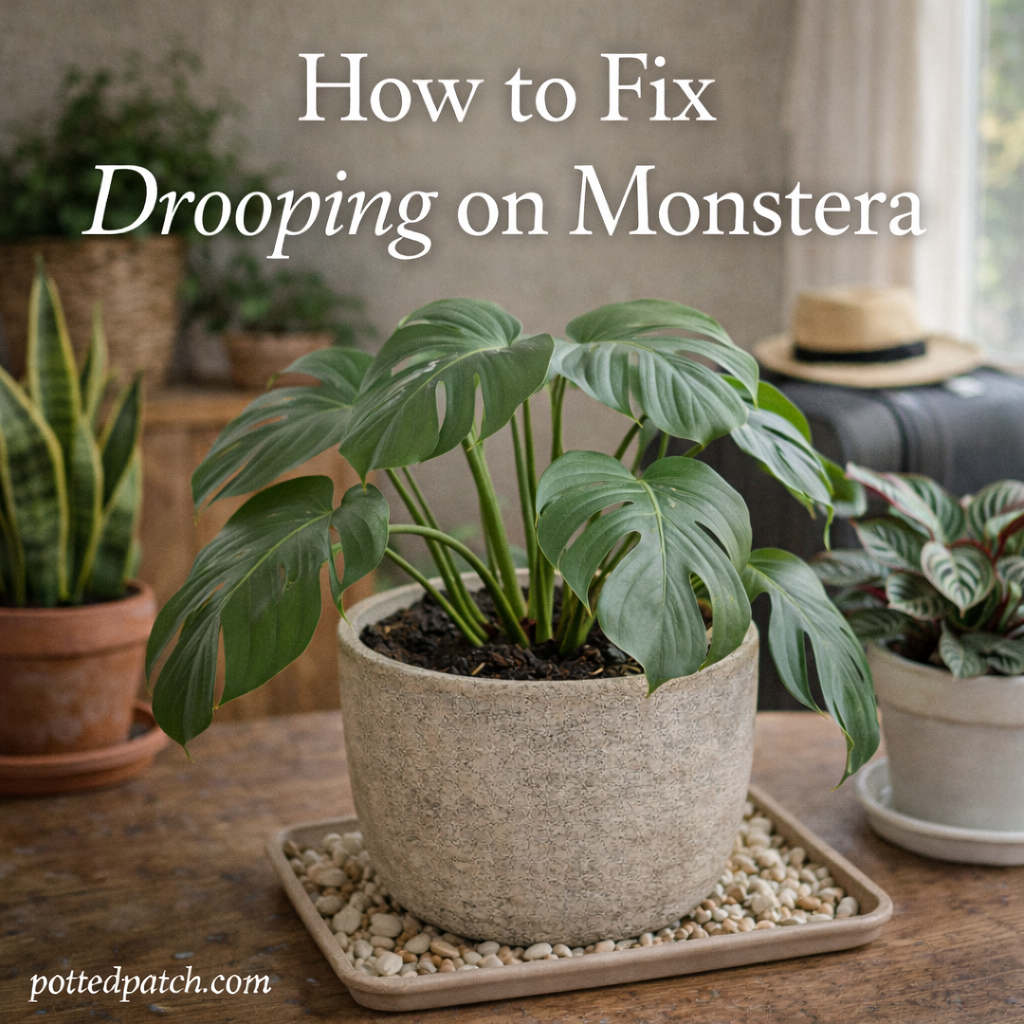
Drooping leaves are one of the most common issues Monstera owners face—and thankfully, one of the easiest to fix once you understand the cause. A drooping Monstera is usually communicating stress related to water, light, roots, or environment rather than a serious disease.
This guide breaks down the most common reasons Monsteras droop and exactly how to fix each one so your plant can regain its strength and structure.
What Drooping Looks Like on a Monstera
Drooping can show up in different ways depending on the underlying issue.
Common signs include:
- Leaves hanging downward instead of standing upright
- Stems bending or leaning
- Entire plant looking limp or tired
- Loss of leaf firmness (turgor)
The key is identifying why the drooping is happening before taking action.
Underwatering
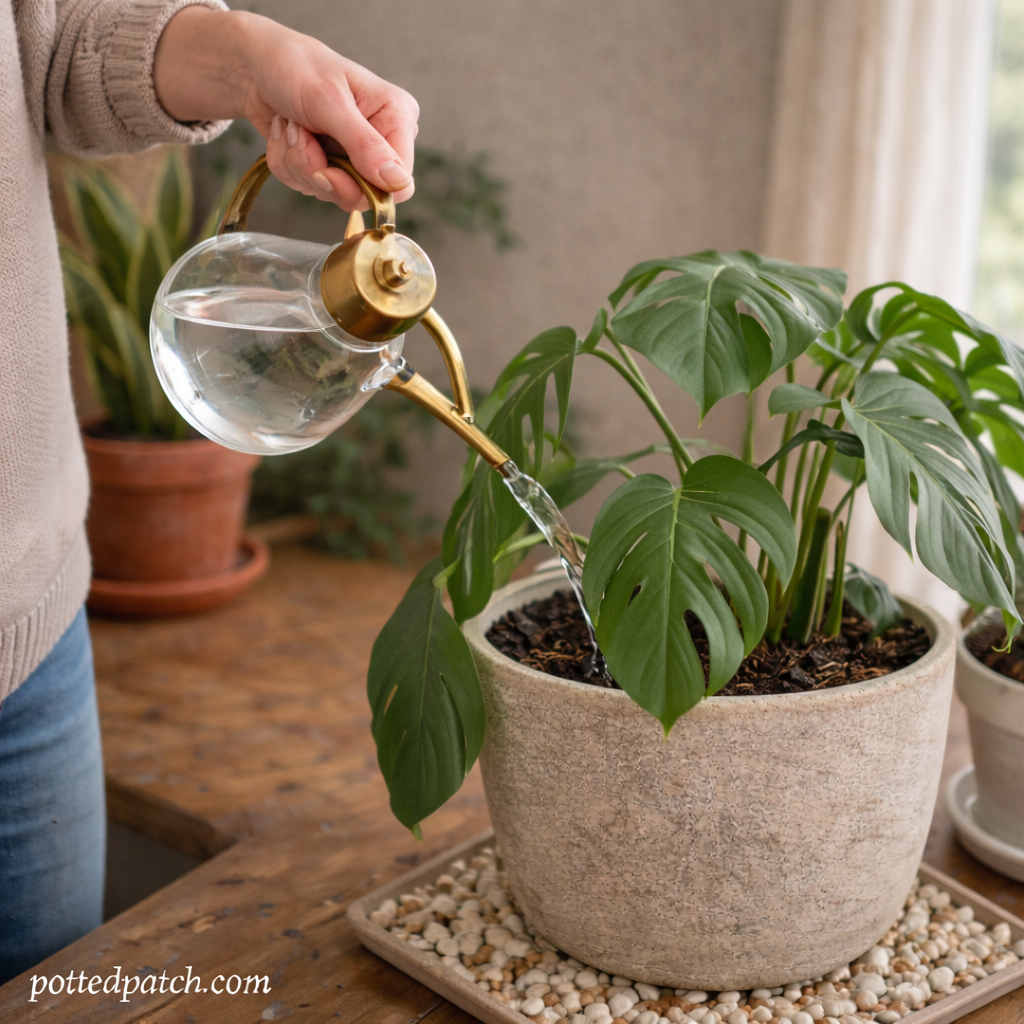
Underwatering is the most common cause of drooping Monsteras.
When roots don’t get enough moisture, they can’t support leaf structure, causing leaves to wilt and droop.
How to Check
- Soil feels dry several inches down
- Pot feels very light
- Leaves may look thin or slightly curled
How to Fix It
- Water thoroughly until excess drains from the bottom
- Allow the plant to fully rehydrate
- Resume watering when the top 1–2 inches of soil dry out
Most underwatered Monsteras perk up within a few hours to a day after proper watering.
Overwatering and Root Stress
Overwatering can also cause drooping, though it develops more slowly.
Saturated soil prevents roots from accessing oxygen, weakening their ability to support the plant.
Signs of Overwatering
- Soil stays wet for many days
- Yellowing lower leaves
- Soft or mushy stems
- Drooping paired with slow growth
How to Fix It
- Stop watering immediately
- Ensure the pot has drainage holes
- Let soil dry partially before watering again
- Consider repotting if soil is dense or smells musty
Healthy roots are firm and light-colored—not brown or slimy.
Inadequate Light
Monsteras rely on light to maintain strong stems and leaf structure.
Too little light causes weak, stretched growth that can’t support itself.
Signs of Light-Related Drooping
- Long stems with wide spacing between leaves
- Small or underdeveloped leaves
- Leaning toward windows
How to Fix It
- Move the plant closer to bright, indirect light
- Avoid dark corners or interior rooms
- Rotate the plant regularly for even growth
Improved light leads to firmer stems over time.
Temperature or Draft Stress
Sudden temperature changes weaken Monstera leaves and stems.
Common Sources of Stress
- Cold drafts from windows or doors
- Air conditioning vents
- Heaters blowing directly on the plant
How to Fix It
- Keep temperatures between 65–85°F (18–29°C)
- Move the plant away from vents
- Avoid placing it near exterior doors in winter
Temperature stress often causes temporary drooping that improves once conditions stabilize.
Rootbound or Pot Issues
When roots outgrow their container, water absorption becomes uneven, leading to drooping.
Signs the Pot Is the Problem
- Roots growing out of drainage holes
- Soil drying out very quickly
- Plant becoming top-heavy or unstable
How to Fix It
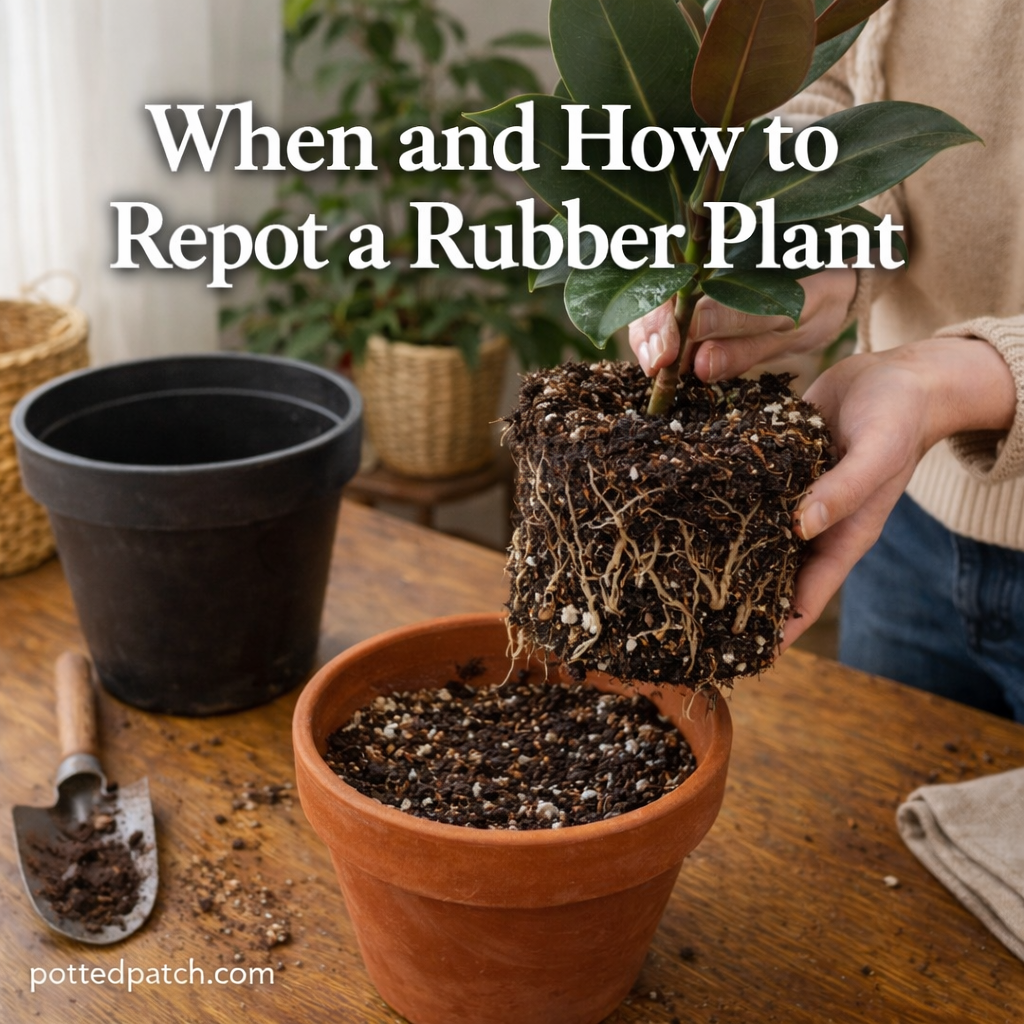
- Repot into a container 1–2 inches larger
- Use fresh, well-draining soil
- Repot during spring if possible
Monsteras typically need repotting every 1–2 years.
Lack of Structural Support
As Monsteras mature, their size alone can cause drooping.
Large leaves and long stems need support to stay upright.
How to Fix It
- Add a moss pole or stake
- Gently tie stems using soft plant ties
- Position the plant so growth leans naturally upward
Support doesn’t fix health issues—but it prevents mechanical drooping.
Transplant or Environmental Shock
Drooping shortly after repotting or moving locations is common.
What to Expect
- Temporary leaf droop
- Slower growth
- Slight leaf repositioning
What to Do
- Avoid adjusting care too much
- Keep light and watering consistent
- Give the plant time to adjust
Most Monsteras recover within 1–2 weeks.
When Drooping Is Normal
Not all drooping signals a problem.
Normal situations include:
- Slight droop at night
- Temporary droop during hot afternoons
- Older outer leaves hanging lower than new growth
Focus on overall plant health, not a single leaf.
Final Thoughts
Drooping on a Monstera is usually a care signal—not a crisis. By checking soil moisture, light levels, temperature, and root space, you can quickly identify the cause and correct it. Most Monsteras recover quickly once their basic needs are met.
Healthy Monsteras hold their leaves confidently, grow steadily, and bounce back fast when cared for thoughtfully.