Bringing home your first houseplant is exciting—but it can also feel overwhelming. With so many options, it’s easy to end up with a plant that looks great in the store but struggles at home.
The good news? Choosing your first houseplant doesn’t have to be complicated. With a little honesty about your space and habits, you can pick a plant that thrives instead of barely survives.
This beginner-friendly guide walks you through exactly what to consider before buying your first plant, so you start off confident and successful.
Start With Your Lifestyle, Not the Plant
Before looking at plant names or care tags, take a moment to assess your daily routine.
Ask yourself:
- How often do you want to water a plant?
- Are you usually home, or do you travel often?
- Do you want something hands-off or interactive?
If you forget to water things, low-maintenance plants are your best friend. If you enjoy routines and checking on growth, you may enjoy slightly more involved plants.
Being realistic here saves a lot of frustration later.
Understand the Light in Your Home
Light is one of the most important factors for plant success.
Check Your Window Direction
Different windows provide different light levels:
- South-facing windows: Bright, direct light for most of the day
- East-facing windows: Gentle morning light
- West-facing windows: Strong afternoon light
- North-facing windows: Low, indirect light
Stand where you plan to place your plant and observe how bright it actually gets during the day.
Know the Difference Between Direct and Indirect Light
- Direct light means sun rays hit the plant directly
- Bright indirect light means the area is well-lit, but no sun hits the leaves
- Low light means the space stays dim most of the day
Most beginner-friendly houseplants prefer bright, indirect light.
Choose Low-Maintenance Plants First
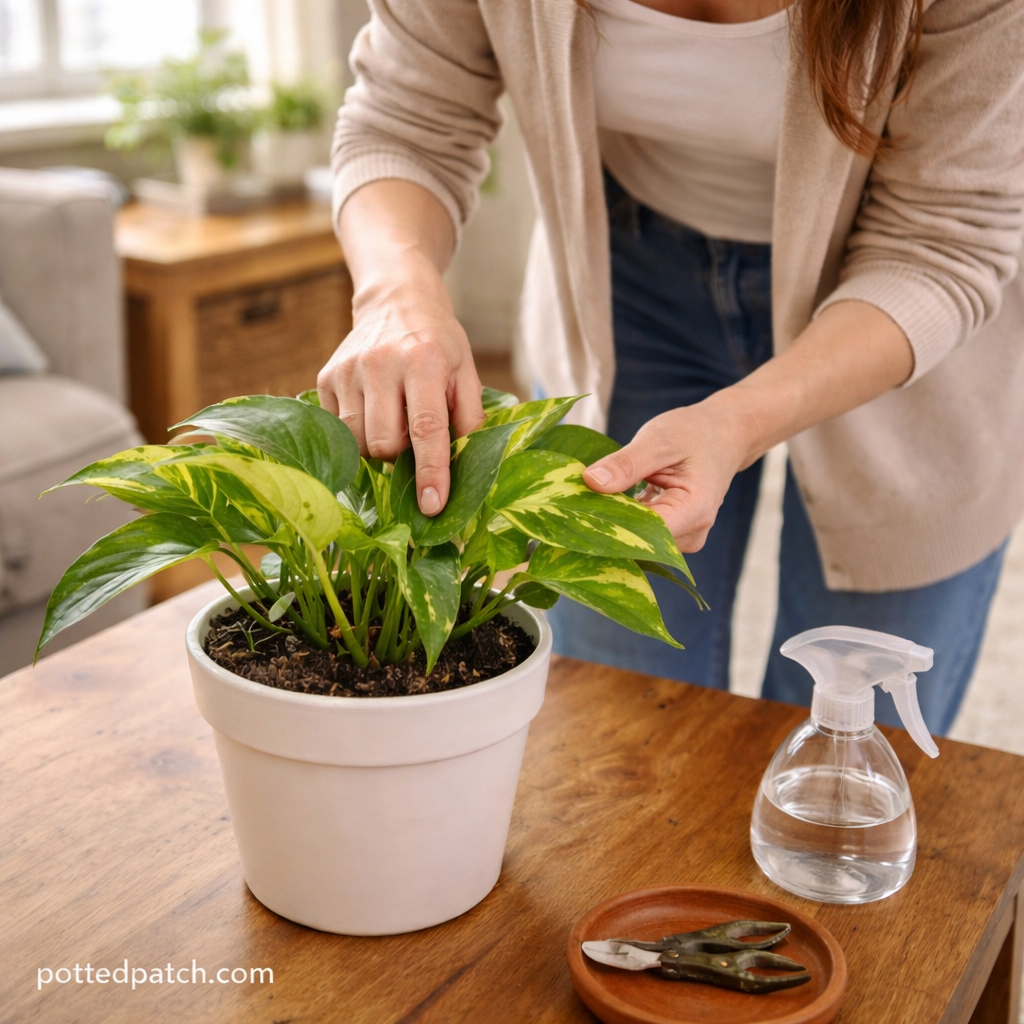
Your first houseplant should be forgiving.
Look for plants that:
- Tolerate missed waterings
- Adapt to different light conditions
- Grow slowly and steadily
- Don’t require frequent pruning or repotting
Avoid plants labeled “finicky,” “sensitive,” or “advanced care” until you gain confidence.
Pay Attention to Watering Needs
Overwatering is the most common beginner mistake.
When choosing a plant, read the care tag and note:
- How often it needs water
- Whether the soil should dry out between waterings
- If it prefers consistently moist or dry soil
For beginners, plants that prefer drying out between waterings are usually easier to manage than plants that need constant moisture.
Pick the Right Size for Your Space
It’s tempting to buy a large plant for instant impact, but smaller plants are often easier to care for.
Smaller plants:
- Adjust faster to new environments
- Need less frequent watering
- Are easier to move for light adjustments
- Cost less if mistakes happen
You can always size up later once you gain experience.
Consider Your Home Environment
Your indoor conditions matter more than you might think.
Think about:
- Temperature: Most houseplants prefer consistent temperatures between 65–80°F
- Humidity: Dry air can stress some plants
- Pets: Some plants are toxic to cats or dogs
If you have pets or small children, always check plant safety before buying.
Read the Plant Label Carefully
Plant tags provide helpful clues, but they’re not perfect.
Use them as a starting point, not a guarantee. Focus on:
- Light preference
- Water frequency
- Mature size
- Any special notes about sensitivity
If something on the tag doesn’t match your space, choose a different plant.
Where to Buy Your First Houseplant
Where you buy your plant can affect its health.
Good beginner-friendly options include:
- Local garden centers with knowledgeable staff
- Well-maintained nurseries
- Reputable online plant shops
Avoid plants that already look stressed. Yellow leaves, soggy soil, or visible pests are signs to walk away.
Common Beginner Mistakes to Avoid
Many new plant owners run into the same issues early on.
Try to avoid:
- Buying plants based only on appearance
- Watering on a strict schedule instead of checking soil
- Placing plants far from windows
- Using decorative pots without drainage holes
- Giving up after one plant struggle
Every plant owner learns through trial and error—mistakes are part of the process.
Start Simple and Build Confidence
Your first houseplant doesn’t need to be rare or impressive. It just needs to fit your home and lifestyle.
Once you succeed with one plant, you’ll naturally feel more comfortable experimenting with new types, learning care routines, and growing your indoor collection over time.
Starting simple is how long-term plant success begins.