

Snake plants are one of the most forgiving houseplants you can own. Known for their upright leaves and tolerance for neglect, they’re a favorite for beginners, busy households, and low-light homes. Despite their reputation as “unkillable,” snake plants still benefit from proper care to stay healthy and attractive long term.
This guide covers everything you need to know to care for a snake plant indoors, with practical tips that work in real homes.
Understanding Snake Plants
Snake plants are hardy, slow-growing plants that store water in their thick leaves. This makes them naturally drought-tolerant and adaptable to a wide range of indoor conditions.
Because of this, most snake plant problems come from overcare rather than neglect.
Light Requirements
Snake plants are extremely adaptable when it comes to light.
They grow best in:
- Bright, indirect light
- Medium indoor light
They also tolerate:
- Low-light rooms
- Artificial lighting
While snake plants can survive in dim areas, growth will be slower. Avoid placing them in harsh, direct sunlight for extended periods, as this can scorch the leaves.
How Often to Water a Snake Plant
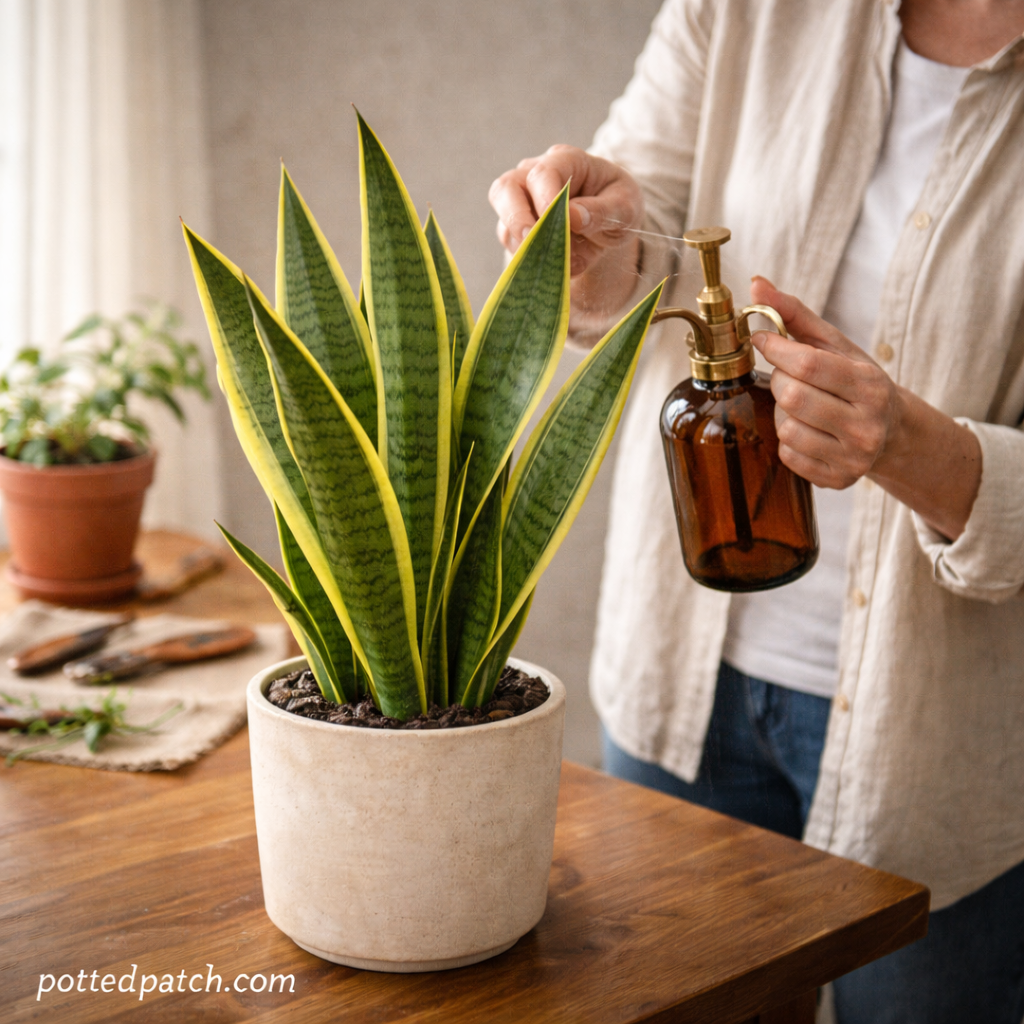
Watering correctly is the most important part of snake plant care.
General Watering Rules
- Allow the soil to dry out completely between waterings
- Water less frequently in fall and winter
- When in doubt, wait a few more days before watering
Typical watering frequency:
- Every 2–3 weeks in warmer months
- Every 3–5 weeks during cooler months
Always check the soil rather than relying on a schedule.
Choosing the Right Pot and Soil
Pot Selection
Snake plants prefer snug containers with drainage holes.
Best options include:
- Terracotta pots
- Ceramic pots with drainage
- Heavy planters that prevent tipping
Avoid pots without drainage, as standing water can quickly lead to root rot.
Soil Type
Snake plants need fast-draining soil.
An ideal mix:
- Standard indoor potting soil
- Added perlite or sand for drainage
Dense or moisture-retaining soil increases the risk of root problems.
Temperature and Humidity
Snake plants are comfortable in most indoor environments.
Ideal conditions:
- Temperatures between 60–85°F
- Average household humidity
They dislike:
- Cold drafts
- Temperatures below 50°F
- Sudden temperature swings
Keep snake plants away from exterior doors and drafty windows during winter.
Fertilizing Snake Plants
Snake plants don’t need much fertilizer.
Fertilizer Guidelines
- Use a balanced houseplant fertilizer
- Feed once every 2–3 months during spring and summer
- Do not fertilize in fall or winter
Over-fertilizing can cause weak growth and salt buildup in the soil.
Repotting a Snake Plant
Snake plants grow slowly and don’t need frequent repotting.
When to Repot
- Roots are pushing through drainage holes
- The pot is cracking from pressure
- Growth has stalled due to root crowding
Most snake plants only need repotting every 2–4 years.
How to Repot Safely
- Choose a pot 1–2 inches larger
- Use fresh, well-draining soil
- Gently loosen roots if tightly bound
- Water lightly after repotting
Allow the plant time to adjust before resuming normal care.
Cleaning and Pruning
Cleaning Leaves
Dust can dull snake plant leaves over time.
- Wipe leaves with a damp cloth monthly
- Avoid leaf shine products
Pruning
Snake plants require minimal pruning.
Remove:
- Yellowing leaves
- Damaged or broken leaves
- Leaves leaning excessively
Always cut at the base with clean scissors.
Common Snake Plant Problems
Yellow Leaves
Usually caused by:
- Overwatering
- Poor drainage
Let the soil dry completely and adjust watering habits.
Soft or Mushy Leaves
This often signals root rot.
Action steps:
- Remove the plant from the pot
- Trim damaged roots
- Repot in dry, fresh soil
Slow Growth
Normal for snake plants, but can also be due to:
- Low light
- Cold temperatures
- Root crowding
Propagating Snake Plants
Snake plants are easy to propagate.
Common methods:
- Division during repotting
- Leaf cuttings in soil or water
Propagation is slow but rewarding, especially if you want to expand your collection.
Long-Term Care Tips
For a healthy, attractive snake plant:
- Rotate the pot occasionally for even growth
- Water less rather than more
- Keep leaves clean
- Use simple, breathable containers
Snake plants thrive on consistency and restraint.
Final Thoughts
Caring for a snake plant indoors is refreshingly simple. With proper drainage, infrequent watering, and adaptable lighting, this plant can thrive for years with minimal effort. If you’re looking for a reliable, low-maintenance houseplant, the snake plant is one of the best choices you can make.