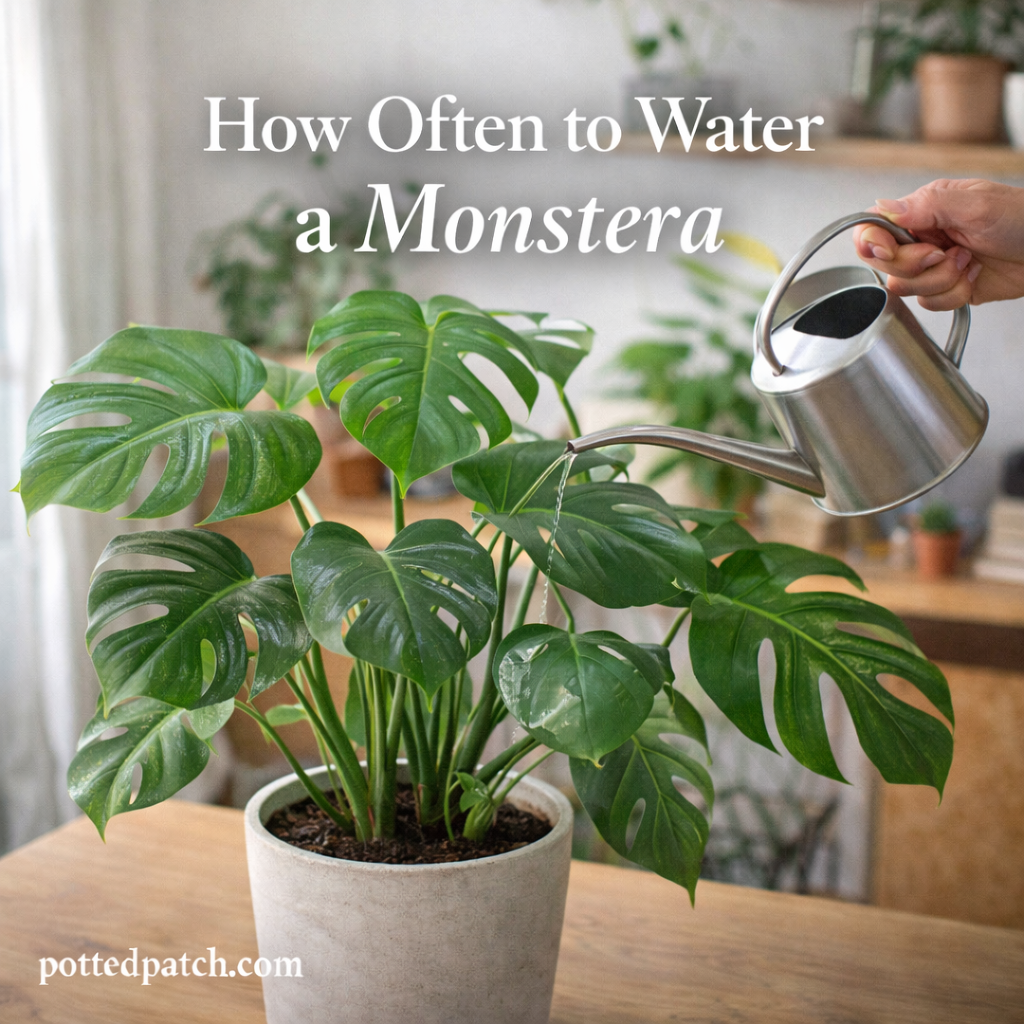
Watering is one of the most common areas where Monstera owners feel unsure—and for good reason. Too much water can cause root rot, while too little can slow growth and cause drooping leaves. The key is understanding when your Monstera actually needs water, rather than following a strict schedule.
This guide explains how often to water a Monstera, how to tell when it’s thirsty, and how factors like light, pot size, and season affect watering frequency.
Why Watering Frequency Matters for Monstera
Monsteras prefer evenly moist soil, but they hate sitting in water. Their thick roots need oxygen just as much as they need moisture.
Proper watering helps:
- Support large, healthy leaf growth
- Prevent root rot and fungal issues
- Encourage strong root development
- Maintain consistent growth year-round
Incorrect watering is the #1 reason Monsteras struggle indoors.
How Often to Water a Monstera (General Rule)
For most indoor Monsteras:
- Water every 7–10 days during spring and summer
- Water every 10–14 days during fall and winter
However, this is only a starting point. Your Monstera’s actual needs depend on its environment.
The Best Way to Know When to Water
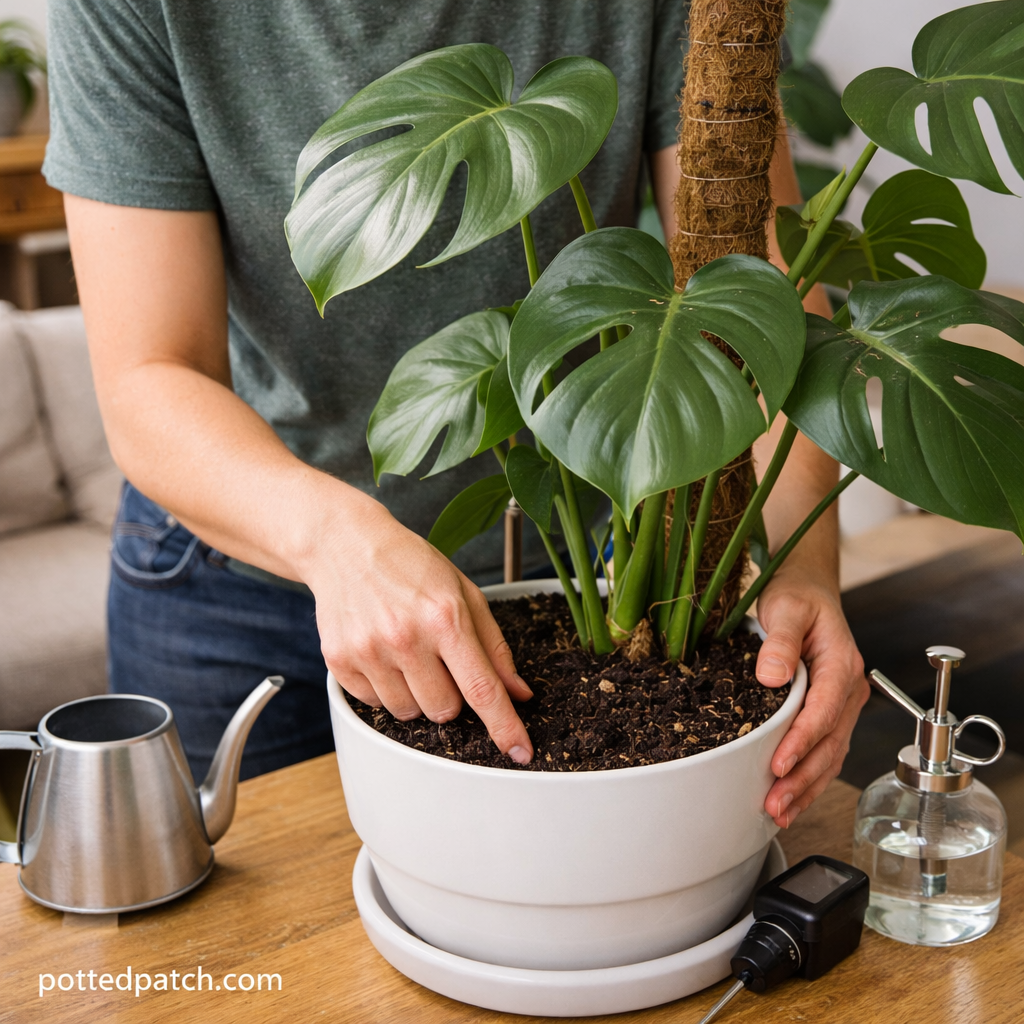
Instead of relying on a calendar, always check the soil first.
Finger Test
Insert your finger 2–3 inches into the soil:
- If the top few inches are dry → it’s time to water
- If the soil is still moist → wait a few more days
Pot Weight Test
Lift the pot slightly:
- Light pot = needs water
- Heavy pot = still moist
These methods are more reliable than schedules.
Watering Frequency by Season
Spring and Summer (Active Growth)
Monsteras grow fastest during warmer months.
Expect to water:
- Every 7–10 days
- Slightly more often in bright light
Growth increases water uptake, so soil dries faster.
Fall and Winter (Dormant Period)
Growth slows significantly.
Expect to water:
- Every 10–14 days
- Sometimes longer in cooler homes
Overwatering during winter is a common mistake.
Factors That Affect How Often to Water
Light Levels
- Bright, indirect light = more frequent watering
- Low light = slower soil drying
Pot Size
- Smaller pots dry out faster
- Larger pots hold moisture longer
Consider this before increasing water frequency.
Pot Material
- Terracotta pots dry quickly
- Plastic and ceramic retain moisture longer
Adjust watering habits accordingly.
Humidity and Temperature
- Warm, dry air = faster evaporation
- Cool, humid air = slower drying
Homes with heating or AC may require closer monitoring.
How to Water a Monstera Correctly
When you water, do it thoroughly.
Best practices:
- Water until excess drains from the bottom
- Empty the saucer after watering
- Never let the plant sit in standing water
Light, frequent watering is less effective than deep, even watering.
Signs You’re Overwatering
- Yellowing leaves
- Soft or mushy stems
- Foul-smelling soil
- Slow or stalled growth
If you notice these signs, reduce watering immediately and check drainage.
Signs You’re Underwatering
- Drooping or curling leaves
- Dry, crispy edges
- Soil pulling away from pot edges
Underwatering is easier to fix than overwatering—water thoroughly and resume proper checks.
Common Watering Mistakes to Avoid
- Watering on a fixed schedule
- Using pots without drainage holes
- Letting the plant sit in excess water
- Watering lightly instead of deeply
Small adjustments can dramatically improve plant health.
Final Thoughts
So, how often should you water a Monstera? The real answer is when the soil tells you to. While 7–10 days is common during active growth, checking soil moisture will always give you the best results.
By paying attention to light, season, and soil dryness, you’ll develop a natural watering rhythm—and your Monstera will reward you with bigger, healthier leaves. 🌿