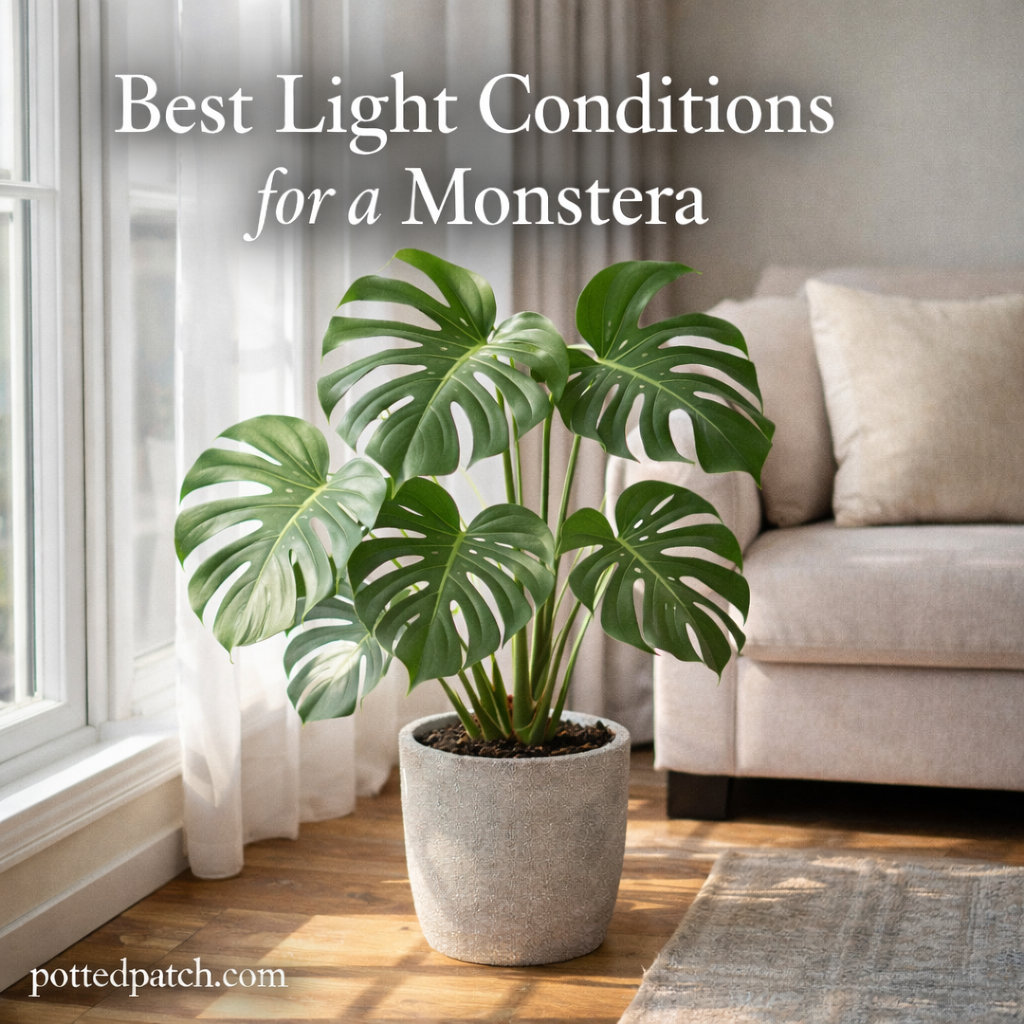
Light is one of the most important factors in keeping a Monstera healthy, balanced, and growing consistently. Too little light leads to slow growth and small leaves, while too much direct sun can scorch foliage and stress the plant.
This guide explains the best light conditions for a Monstera, how to identify what your home provides, and how to adjust placement for long-term success.
Why Light Is So Important for Monstera Plants
Monsteras are tropical plants that naturally grow under forest canopies. They’re adapted to bright light that’s filtered through trees—not harsh, direct sun and not deep shade either.
Proper lighting supports:
- Large, well-shaped leaves
- Natural leaf splits (fenestrations)
- Strong stems and upright growth
- Even water use and soil drying
Without enough light, Monsteras survive—but they don’t truly thrive.
Ideal Light Conditions for a Monstera
The best light for a Monstera is bright, indirect light.
This means:
- Plenty of daylight
- No direct sun hitting the leaves for long periods
- Light that feels bright but softened
A good rule of thumb: if the area is bright enough to comfortably read during the day without artificial lights, it’s usually suitable.
What Bright Indirect Light Looks Like in Real Homes
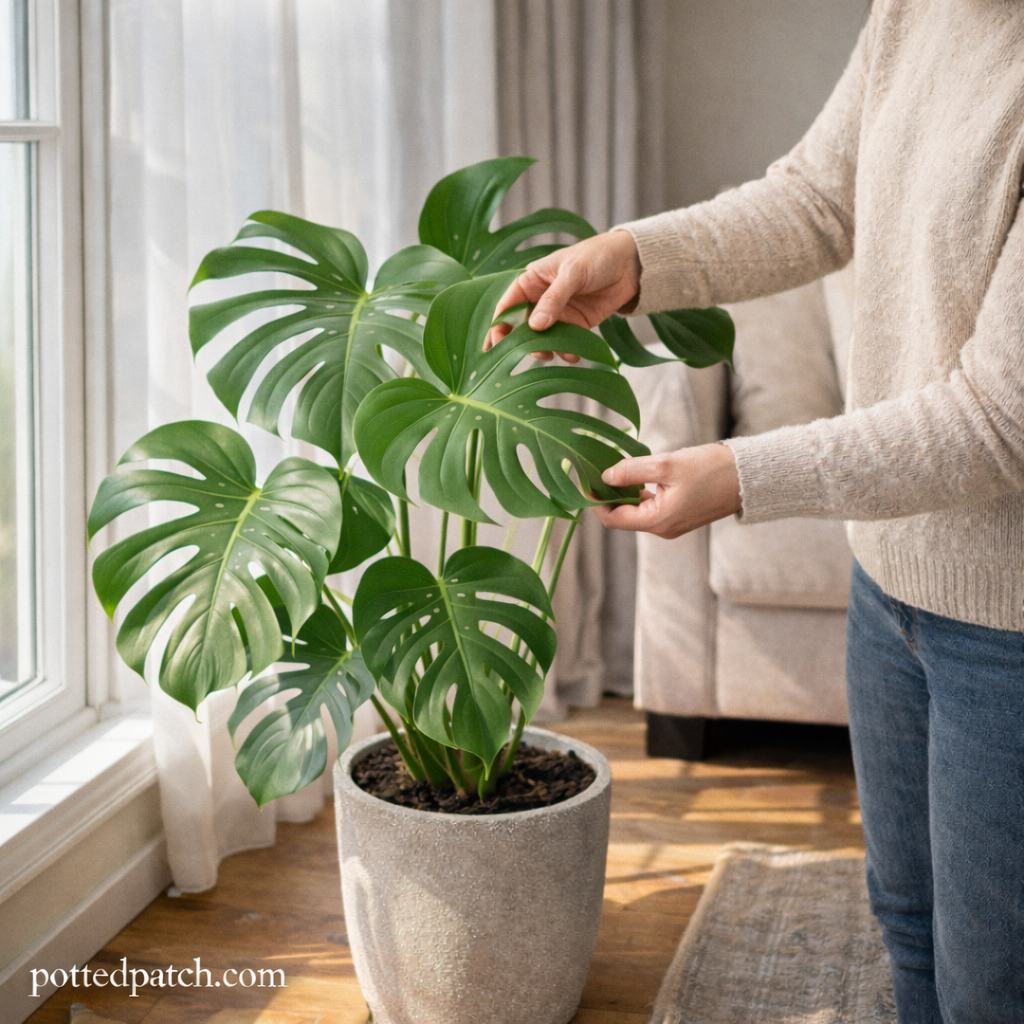
Bright indirect light can be confusing, so here are clear examples.
Good placements include:
- 2–6 feet away from a south-facing window
- Near an east-facing window with morning light
- In a room with large windows and sheer curtains
- Adjacent to a bright window, but not directly in front of it
Monsteras benefit from consistent light more than intense bursts.
Can a Monstera Grow in Low Light?
Yes—but with trade-offs.
In low light:
- Growth slows significantly
- Leaves stay smaller
- Fenestrations may not appear
- Soil dries more slowly
Low-light conditions are better described as survivable, not ideal. If your Monstera is in low light, reduce watering and expect slower progress.
Is Direct Sunlight Bad for Monsteras?
Direct sunlight—especially afternoon sun—can damage Monstera leaves.
Signs of too much sun include:
- Yellow patches or bleaching
- Crispy brown edges
- Curling or drooping leaves
Morning sun (early east-facing light) is usually fine, but harsh midday or afternoon sun should be filtered or avoided.
Best Window Directions for Monstera Light
Window direction plays a big role in plant placement.
East-Facing Windows
- Gentle morning sun
- Excellent option for Monsteras
- Low risk of leaf burn
South-Facing Windows
- Brightest overall light
- Place Monsteras several feet back
- Use sheer curtains if needed
West-Facing Windows
- Strong afternoon sun
- Can cause leaf damage
- Requires distance or filtering
North-Facing Windows
- Lowest natural light
- Works only if windows are large
- Growth may be slower
How to Tell If Your Monstera Needs More Light
Monsteras show clear signs when light levels are off.
Common signs of insufficient light:
- Long gaps between leaves
- Stretched, leggy stems
- Leaves growing toward the window
- Lack of new growth over weeks
Rotating the plant every few weeks helps keep growth even.
How to Adjust Light Without Moving the Plant Far
If your space is limited, small adjustments can make a big difference.
Try:
- Pulling the plant slightly closer to the window
- Removing heavy curtains during the day
- Rotating the pot weekly
- Raising the plant on a stand
Even a one- or two-foot change can improve light quality.
Using Grow Lights for Monstera Plants
Grow lights can help if natural light is limited.
Basic guidelines:
- Use a full-spectrum grow light
- Place it 12–24 inches above the plant
- Run it 8–12 hours per day
- Combine with natural light if possible
Grow lights are especially useful in winter or north-facing rooms.
Seasonal Light Changes to Watch For
Light conditions change throughout the year.
In winter:
- Days are shorter
- Light intensity drops
- Monsteras grow more slowly
In summer:
- Light is stronger
- Soil dries faster
- Plants may need slight repositioning
Adjust placement seasonally instead of sticking to one spot year-round.
Common Monstera Light Mistakes
Avoid these frequent issues:
- Placing the plant in direct afternoon sun
- Keeping it in a dark corner long-term
- Moving it too often
- Ignoring seasonal light changes
Monsteras prefer stable, predictable conditions.
Final Thoughts
The best light conditions for a Monstera are bright, indirect, and consistent. While Monsteras can tolerate less-than-perfect light, providing the right placement leads to stronger growth, healthier leaves, and those iconic splits everyone loves.
If your Monstera looks healthy but slow-growing, light—not water or fertilizer—is often the missing piece. Get the light right, and the rest becomes much easier. 🌿