
Monsteras are one of the most popular houseplants for a reason. Their bold, split leaves bring instant character to a space, yet they’re surprisingly low-maintenance once you understand their basic needs. Whether you’re caring for a young plant or a mature, climbing Monstera, this guide covers everything you need to help it thrive indoors.
Understanding Monstera as a Houseplant
Monsteras are tropical plants that naturally grow beneath forest canopies, climbing trees and stretching toward filtered light. This background explains many of their indoor preferences: bright but indirect light, consistent watering, and room to grow upward.
When grown indoors, Monsteras adapt well to typical home environments as long as their core needs are met. They tend to grow steadily rather than explosively, which makes them easier to manage over time.
Light Requirements for Indoor Monstera
Best Light Conditions
Monsteras prefer bright, indirect light. Place them near a window where sunlight is diffused rather than direct. East-facing windows are ideal, while south- or west-facing windows may require sheer curtains to prevent leaf burn.
Signs of Incorrect Lighting
Too little light may cause:
- Slow growth
- Smaller leaves
- Fewer or no leaf splits
Too much light may cause:
- Yellowing leaves
- Brown or scorched edges
If your Monstera isn’t developing fenestrations (the iconic splits), light is often the limiting factor.
How Often to Water a Monstera Indoors
Proper Watering Schedule
Water your Monstera when the top 2–3 inches of soil feel dry. In most homes, this means watering every 7–14 days, depending on season, temperature, and humidity.
Always water thoroughly until excess drains from the bottom of the pot, then discard standing water.
Common Watering Mistakes
Overwatering can lead to:
- Yellow leaves
- Root rot
Underwatering can cause:
- Drooping leaves
- Curling or dry edges
Consistency matters more than frequency. Monsteras prefer a steady rhythm rather than extremes.
Choosing the Right Soil and Pot
Ideal Soil Mix
Monsteras thrive in a well-draining, airy soil mix that retains some moisture without becoming soggy. A blend designed for tropical houseplants works well, especially mixes containing bark, perlite, or coconut coir.
Pot Selection
Choose a pot with drainage holes. Containers without drainage greatly increase the risk of root rot, especially indoors where evaporation is slower.
Repot your Monstera every 1–2 years or when roots begin circling the bottom of the pot.
Temperature and Humidity Needs
Temperature Range
Monsteras prefer temperatures between 65°F and 85°F. They tolerate normal indoor conditions well but should be kept away from cold drafts, air conditioners, and heating vents.
Humidity Preferences
While Monsteras tolerate average household humidity, they grow best with moderate to high humidity. Signs of low humidity include crispy leaf edges and slowed growth.
Ways to increase humidity:
- Group plants together
- Use a pebble tray
- Run a humidifier nearby
Fertilizing a Monstera Indoors
When and How to Fertilize
Feed your Monstera during the growing season (spring through early fall). Use a balanced liquid houseplant fertilizer every 4–6 weeks.
Avoid fertilizing in winter when growth naturally slows.
Over-Fertilization Signs
- Salt buildup on the soil surface
- Leaf burn or browning tips
- Stunted growth despite feeding
When in doubt, under-fertilizing is safer than overdoing it.
Supporting Growth With a Moss Pole
Why Monsteras Benefit From Support
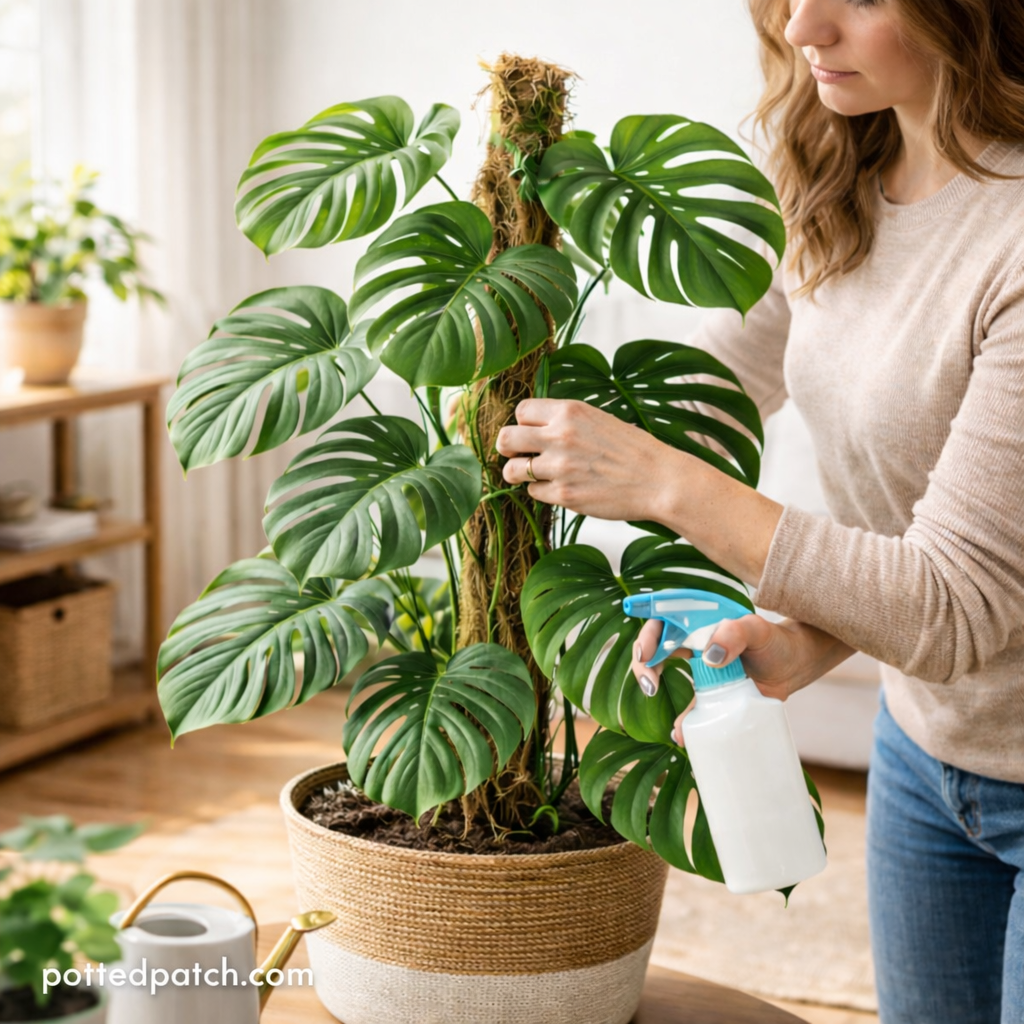
In nature, Monsteras climb trees using aerial roots. Indoors, providing a moss pole or stake encourages upright growth and larger leaves while preventing sprawling or leaning stems.
How to Train Your Monstera
- Place the moss pole during repotting when possible
- Gently guide the main stem toward the pole
- Secure loosely with plant ties
- Allow aerial roots to attach naturally over time
Proper support improves structure, leaf size, and long-term plant health.
Pruning and Shaping Your Monstera
When to Prune
Pruning helps control size, remove damaged leaves, and encourage healthier growth. The best time to prune is during spring or summer.
How to Prune Safely
- Use clean, sharp scissors or pruning shears
- Cut just above a node to encourage branching
- Remove entire leaves at the base if they are damaged or yellowing
Propagating Monstera Indoors
Simple Water Propagation
Monsteras are easy to propagate using stem cuttings.
Steps:
- Cut below a node with at least one leaf and aerial root
- Place the cutting in water, keeping the node submerged
- Change the water weekly
- Transfer to soil once roots are a few inches long
Propagation is a great way to manage size or share plants with others.
Common Monstera Problems and Fixes
Yellow Leaves
Usually caused by overwatering or poor drainage. Check soil moisture and pot drainage immediately.
Brown Leaf Tips
Often linked to low humidity, inconsistent watering, or fertilizer buildup.
Drooping Leaves
Can indicate thirst, cold temperatures, or recent repotting stress.
Monsteras communicate clearly through their leaves, making it easier to adjust care once you recognize the signs.
How Fast Do Monsteras Grow Indoors?
Under good conditions, Monsteras grow steadily throughout spring and summer. Expect new leaves every few weeks during peak growth, with larger and more fenestrated leaves as the plant matures.
Growth slows significantly in winter, which is completely normal.
Final Thoughts on Caring for a Monstera Indoors
Monsteras are forgiving, expressive plants that reward consistency rather than perfection. With proper light, well-draining soil, mindful watering, and room to grow, they can thrive indoors for years.
Once you dial in their environment, Monstera care becomes simple—and the plant’s bold growth makes every bit of effort worth it. 🌿