Choosing the right container for a Monstera isn’t just about looks—it directly affects growth, root health, and long-term plant stability. Monsteras are vigorous growers with thick roots, large leaves, and a tendency to become top-heavy, so the container you choose needs to work with the plant, not against it.
Below is a complete, practical guide to the best containers for Monsteras, what to avoid, and how to size and upgrade pots as your plant matures.
Why the Right Container Matters for Monsteras
Monsteras are not delicate houseplants. They grow fast, develop strong aerial and underground roots, and can outgrow poor containers quickly.
A good container helps by:
- Preventing root rot through proper drainage
- Supporting tall, heavy foliage
- Allowing roots to breathe and expand
- Making watering more predictable
- Reducing stress during growth spurts
A bad container can lead to slow growth, leaning stems, soggy soil, and frequent repotting headaches.
Key Features to Look for in a Monstera Container
Before choosing a material or style, make sure the container meets these non-negotiables.
Drainage Is Mandatory
Monsteras must have at least one drainage hole. Multiple holes are even better.
Without drainage:
- Water pools at the bottom
- Roots suffocate and rot
- Fungal issues become more likely
If a pot doesn’t have drainage, it should only be used as a decorative outer cache pot—not as the main growing container.
Stability and Weight
Monsteras become top-heavy as their leaves mature and fenestrate.
A good container should:
- Sit flat without wobbling
- Have enough weight to counterbalance the foliage
- Support a moss pole or stake if needed
Lightweight pots can tip over easily once the plant reaches medium size.
Proper Sizing
Bigger is not always better.
Choose a pot that is:
- 1–2 inches wider than the root ball for small to medium plants
- 2–4 inches wider for mature Monsteras
Oversized pots hold excess moisture and slow root development.
Best Container Materials for Monsteras
Each material has advantages depending on your environment, watering habits, and plant size.
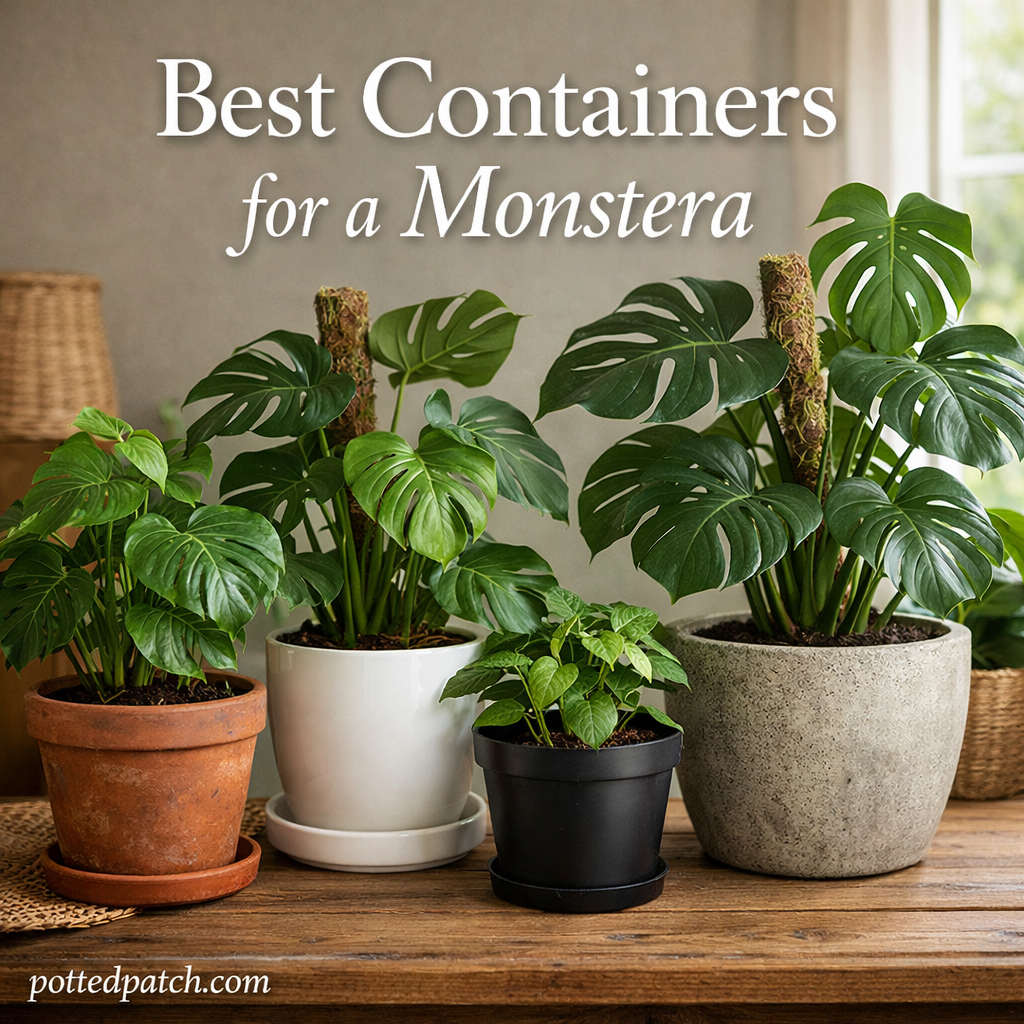
Terracotta Pots
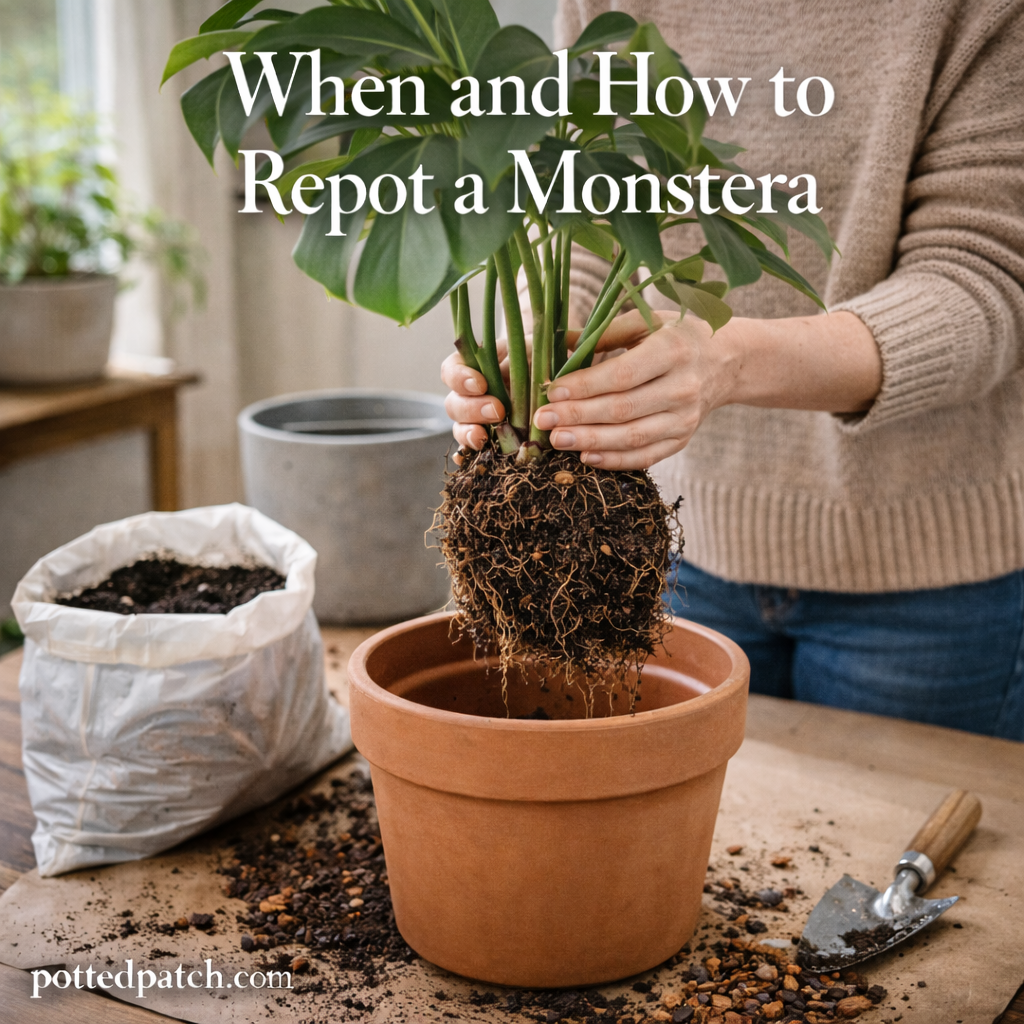
Terracotta is one of the best all-around choices for Monsteras.
Pros
- Breathable material allows moisture to evaporate
- Reduces risk of overwatering
- Heavy enough to support tall growth
- Affordable and widely available
Cons
- Dries out faster in warm or dry homes
- Can crack in cold conditions
- Requires more frequent watering
Terracotta works especially well if you tend to overwater or live in a humid environment.
Ceramic Pots (With Drainage)
Glazed ceramic pots combine function and aesthetics.
Pros
- Attractive and decorative
- Heavier than plastic
- Retains moisture more evenly than terracotta
- Ideal for medium to large Monsteras
Cons
- Must have drainage holes
- Can be expensive
- Less breathable than terracotta
Ceramic is a great option for display areas where stability and appearance both matter.
Plastic Nursery Pots
Plastic pots are practical and commonly used for Monsteras.
Pros
- Lightweight and affordable
- Easy to find in many sizes
- Retains moisture longer
- Simple to repot from
Cons
- Less stable for tall plants
- Easier to overwater
- Less visually appealing on their own
Plastic pots work well when placed inside a heavier decorative cache pot.
Concrete and Cement Pots
Concrete containers are excellent for large, mature Monsteras.
Pros
- Extremely stable
- Modern, minimal appearance
- Great for tall plants and moss poles
- Long-lasting
Cons
- Very heavy
- Can retain cold temperatures
- More difficult to move
These are best for Monsteras that won’t need frequent relocation.
Containers to Avoid for Monsteras
Some containers may look appealing but cause long-term issues.
Avoid:
- Pots without drainage holes
- Glass containers
- Very shallow bowls
- Oversized decorative planters used as primary pots
- Metal containers that lack insulation
If you love the look of a non-draining container, use it as an outer pot and keep your Monstera in a proper inner pot.
Best Pot Shapes for Monsteras
Shape matters almost as much as material.
Ideal Shapes
- Cylindrical pots
- Slightly tapered pots
- Deep containers with wide bases
Less Ideal Shapes
- Narrow-bottom pots
- Very wide but shallow containers
- Tall, skinny pots without weight
A balanced shape helps anchor the plant and supports vertical growth.
Choosing Containers for Different Monstera Sizes
Small Monsteras
- 6–8 inch pots
- Lightweight ceramic or terracotta
- One drainage hole minimum
Medium Monsteras
- 8–12 inch pots
- Heavier materials recommended
- Room for a moss pole
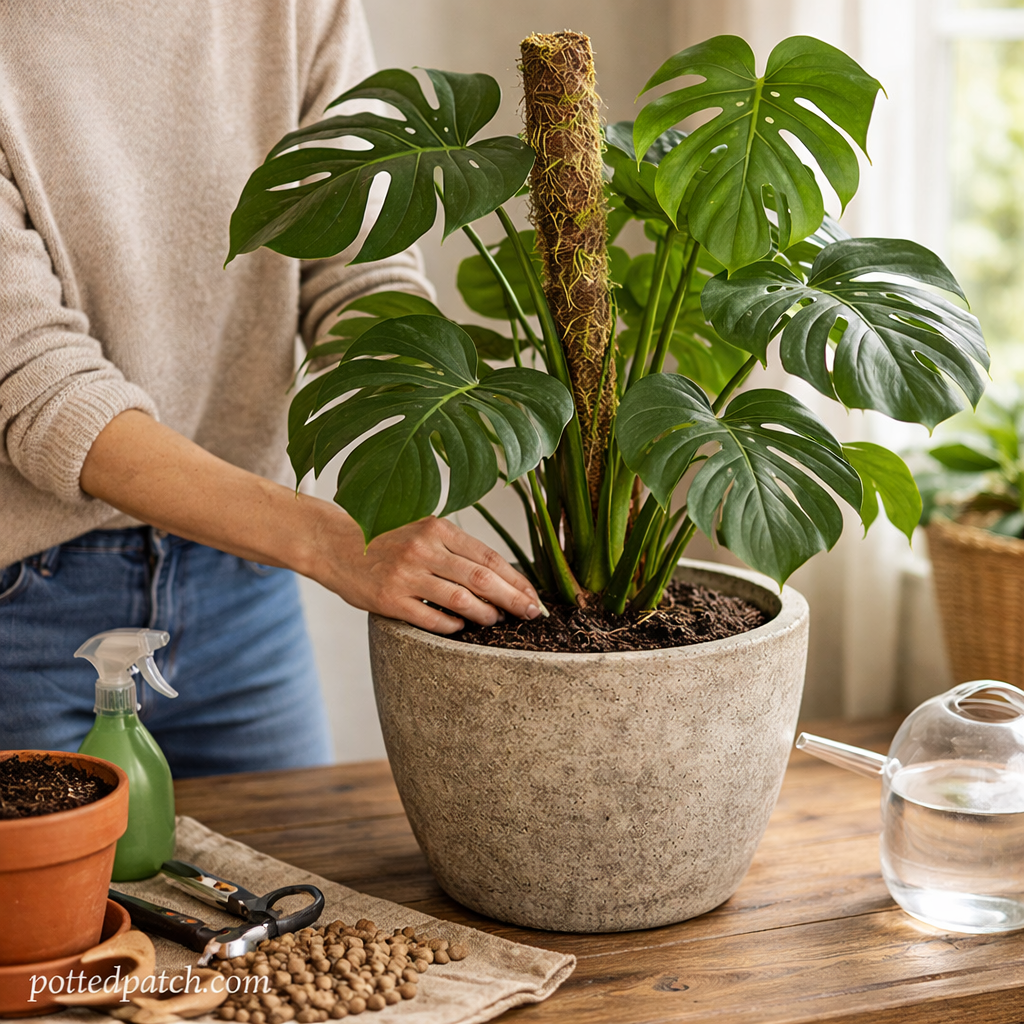
Large Monsteras
- 12–16+ inch pots
- Concrete, ceramic, or thick terracotta
- Wide base for stability
When to Upgrade Your Monstera’s Container
Monsteras typically need repotting every 12–24 months.
Signs it’s time to upgrade:
- Roots growing out of drainage holes
- Soil drying out extremely fast
- Plant becoming unstable or leaning
- Slowed growth despite good care
Always move up gradually rather than jumping several pot sizes at once.
Cache Pots vs Growing Pots
A common setup is using two pots together.
Growing Pot
- Plastic or terracotta
- Has drainage holes
- Holds the soil and roots
Cache Pot
- Decorative outer pot
- No drainage required
- Adds weight and style
This setup offers flexibility and makes watering and repotting easier.
Final Thoughts
The best container for a Monstera is one that balances drainage, stability, and appropriate sizing. Terracotta and ceramic pots are excellent for most homes, while concrete containers shine for large, established plants. Avoid containers without drainage, resist oversizing, and prioritize function over aesthetics.
A well-chosen container makes Monstera care easier, growth faster, and problems far less likely—setting your plant up for long-term success.