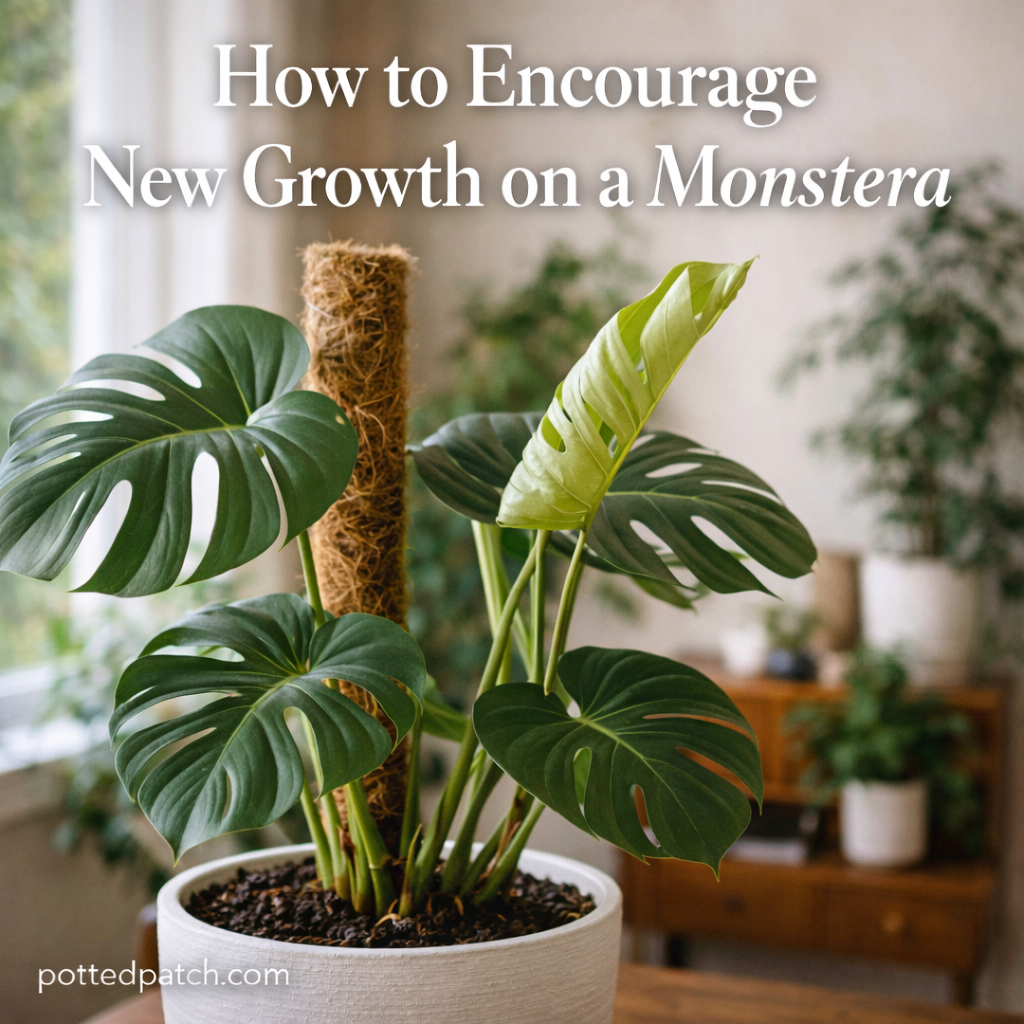
Monsteras are known for their dramatic leaves and steady growth, but there are times when a healthy-looking plant seems to stall. If your Monstera hasn’t produced a new leaf in a while, it doesn’t mean something is wrong—it usually means one or two key needs aren’t being met.
The good news is that Monsteras respond well to small, intentional changes. This guide breaks down exactly how to encourage new growth on a Monstera without stressing the plant.
Understand How Monstera Growth Works
Monsteras grow in cycles, not continuously. New leaves typically emerge one at a time from a growth point, then pause while the plant strengthens roots and stems.
Important things to know:
- Growth slows naturally in fall and winter
- New leaves form from nodes along the main stem
- Root health directly affects leaf production
- Bigger leaves take more energy to produce
Patience matters, but the right conditions make a big difference.
Provide Bright, Indirect Light
Light is the single most important factor for new growth.
For best results:
- Place your Monstera near a bright window
- Avoid harsh, direct sunlight on leaves
- Rotate the plant regularly for even exposure
- Supplement with a grow light if natural light is limited
Too little light often results in long gaps between new leaves or no growth at all.
Water Consistently—Not Excessively
Inconsistent watering is a common growth blocker.
Best watering practices:
- Let the top 1–2 inches of soil dry out
- Water thoroughly until excess drains out
- Empty the saucer after watering
- Avoid keeping the soil constantly wet
Roots need oxygen to support new growth. Overwatering suffocates them and slows leaf production.
Use a Well-Draining Soil Mix
Dense soil can stall growth even if everything else looks fine.
An ideal Monstera soil mix should:
- Drain freely
- Retain some moisture
- Allow air to reach roots
Look for mixes that include bark, perlite, or coco coir. If water sits on the surface or drains very slowly, the soil may be holding your plant back.
Feed Your Monstera During Active Growth
Monsteras benefit from nutrients when they’re actively growing.
Fertilizing tips:
- Feed every 4–6 weeks in spring and summer
- Use a balanced houseplant fertilizer
- Avoid fertilizing in winter
- Never fertilize dry soil
Fertilizer doesn’t force growth, but it gives the plant the resources it needs to produce new leaves.
Support Vertical Growth
Monsteras are climbers by nature.
Encouraging upward growth helps trigger larger leaves and new nodes.
Ways to support growth:
- Add a moss pole or stake
- Gently secure stems as they grow
- Allow aerial roots to attach to supports
- Avoid forcing stems into unnatural positions
Vertical support often leads to faster, healthier leaf development.
Check Root Space and Pot Size
A Monstera that’s outgrown its pot may slow down.
Signs it may need more space:
- Roots circling the bottom
- Water running straight through
- Growth slowing despite good care
- The plant becoming top-heavy
Repot only when needed, and move up just one pot size to avoid excess moisture retention.
Maintain Warm, Stable Conditions
Monsteras grow best in consistent environments.
Ideal conditions include:
- Temperatures between 65–85°F
- No cold drafts
- No sudden temperature swings
- Moderate indoor humidity
Stress from environmental changes can pause growth even if care is otherwise correct.
Prune Strategically (If Needed)
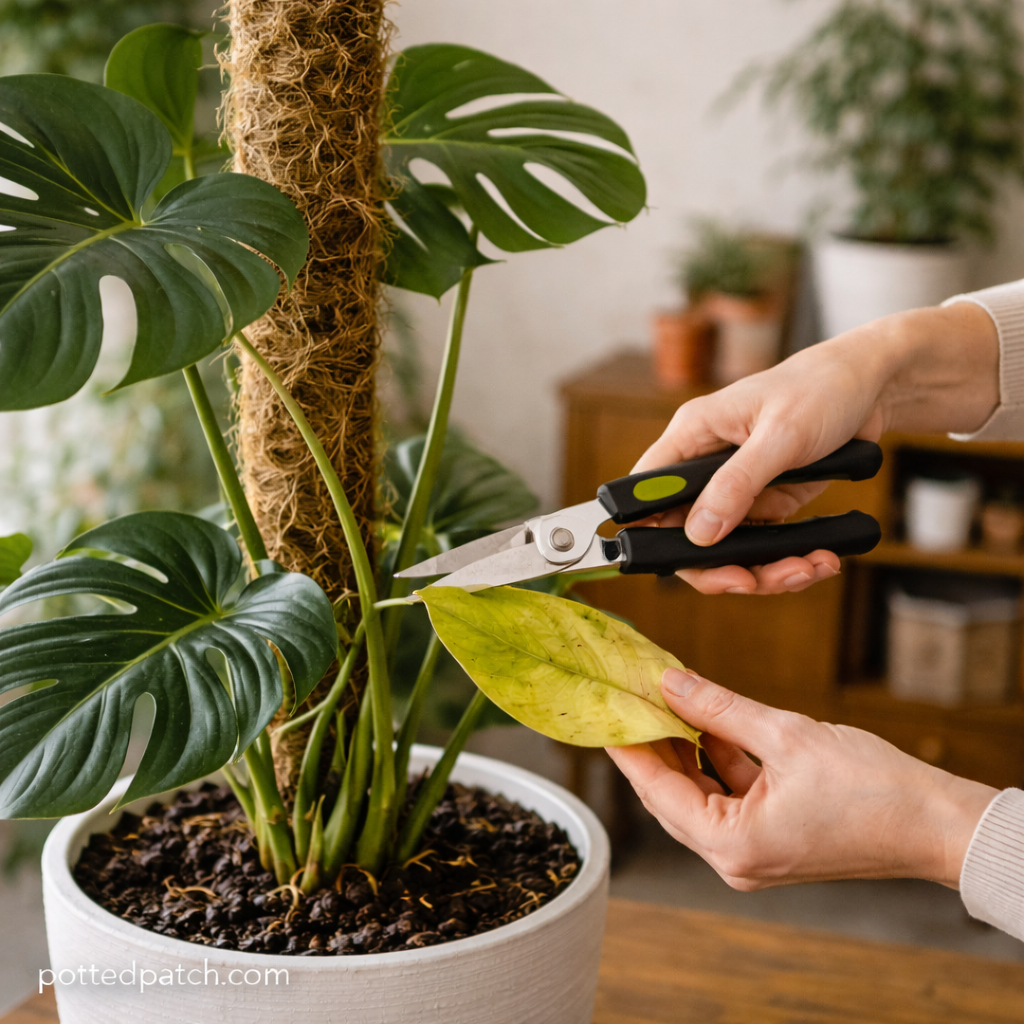
Pruning doesn’t directly create new leaves, but it can redirect energy.
Pruning can help when:
- Growth is leggy
- Lower leaves are damaged
- The plant is uneven
Always cut just above a node and use clean tools. Avoid heavy pruning if growth is already slow.
Be Patient With New Leaves
Once conditions improve, growth still takes time.
What to expect:
- New leaves may take weeks to emerge
- Larger plants grow more slowly
- Leaf unfurling can take several days
- Growth pauses are normal
If your Monstera looks healthy, green, and upright, growth is likely coming.
Common Reasons Monsteras Stop Growing
If nothing seems to help, check for these issues:
- Too little light
- Overwatering
- Compact soil
- Cold temperatures
- Root stress
- Seasonal dormancy
Addressing even one of these often restarts growth.
Final Thoughts
Encouraging new growth on a Monstera isn’t about forcing the plant—it’s about creating the right conditions and letting it respond naturally. With proper light, consistent watering, good soil, and patience, Monsteras reliably reward you with new leaves over time.
If growth feels slow, don’t rush changes. Small, steady improvements lead to the best results.