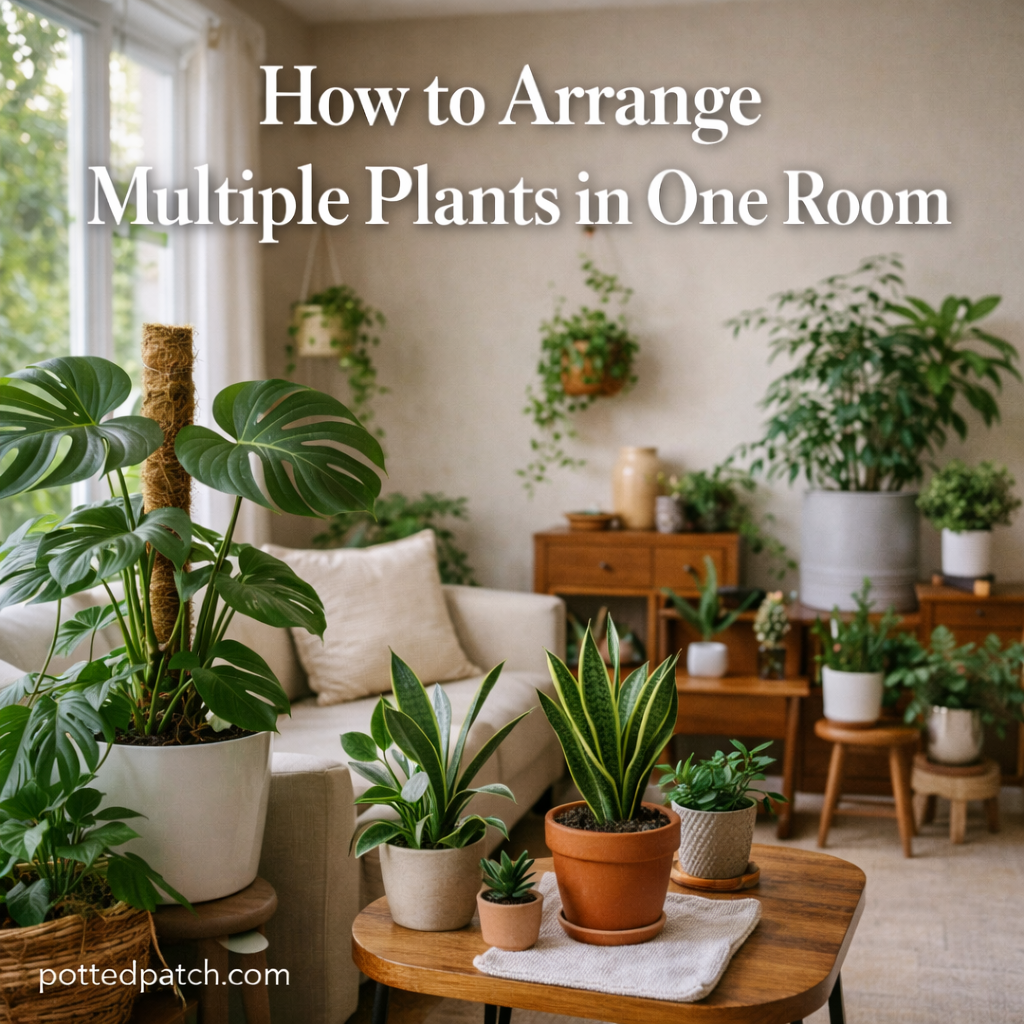
Arranging multiple plants in one room can completely change how a space feels—but without a plan, it can quickly look cluttered or unbalanced. The goal isn’t to squeeze in as many plants as possible. It’s to create a layout that feels intentional, supports plant health, and complements the room itself.
This guide walks through practical, beginner-friendly strategies to help you arrange multiple plants in one room with confidence.
Start With the Room, Not the Plants
Before moving pots around, step back and look at the room as a whole.
Ask yourself:
- Where does natural light enter?
- Which areas feel empty or heavy?
- Where do people walk, sit, or work?
- Are there vertical surfaces being underused?
Plant arrangement works best when it responds to the room’s layout rather than fighting it.
Group Plants by Light Needs
Light is the most important factor when placing multiple plants together.
Create light-based zones:
- Bright light zone near windows
- Medium light zone a few feet back
- Low light zone in corners or shaded areas
Keeping plants with similar light needs together makes care easier and prevents weaker plants from struggling.
Use Height to Create Visual Balance
Flat, same-height arrangements often look dull. Mixing heights adds depth and interest.
Ways to vary height:
- Floor plants for anchors
- Medium plants on stands or stools
- Small plants on shelves or tables
- Hanging plants to draw the eye upward
Think in layers rather than rows.
Anchor the Space With One or Two Statement Plants
Every room benefits from a focal point.
Good anchor plants include:
- Tall floor plants
- Full, leafy specimens
- Plants with dramatic leaf shapes
Once anchors are placed, smaller plants can support them without competing for attention.
Arrange Plants in Odd-Numbered Groups
Odd numbers tend to look more natural and balanced.
Try:
- Groups of three or five
- One large plant paired with two smaller ones
- Mixed textures within each group
Avoid lining plants up evenly unless you’re intentionally going for a minimalist look.
Mix Leaf Shapes and Textures
Too many similar plants in one area can feel repetitive.
Create contrast by mixing:
- Large leaves with fine foliage
- Upright plants with trailing plants
- Glossy leaves with matte or textured leaves
Variation keeps the arrangement visually interesting without adding clutter.
Leave Breathing Room Between Plants
Crowding plants together may look lush at first, but it can backfire.
Why spacing matters:
- Improves airflow
- Reduces pest issues
- Makes individual plants stand out
- Prevents a cluttered appearance
A little negative space helps the plants feel intentional rather than chaotic.
Use Furniture as Plant Platforms
Plants don’t have to live only on the floor or windowsills.
Good plant-friendly surfaces include:
- Side tables
- Bookshelves
- Benches
- Cabinets
- Window ledges
Let furniture help stagger height and create structure in the room.
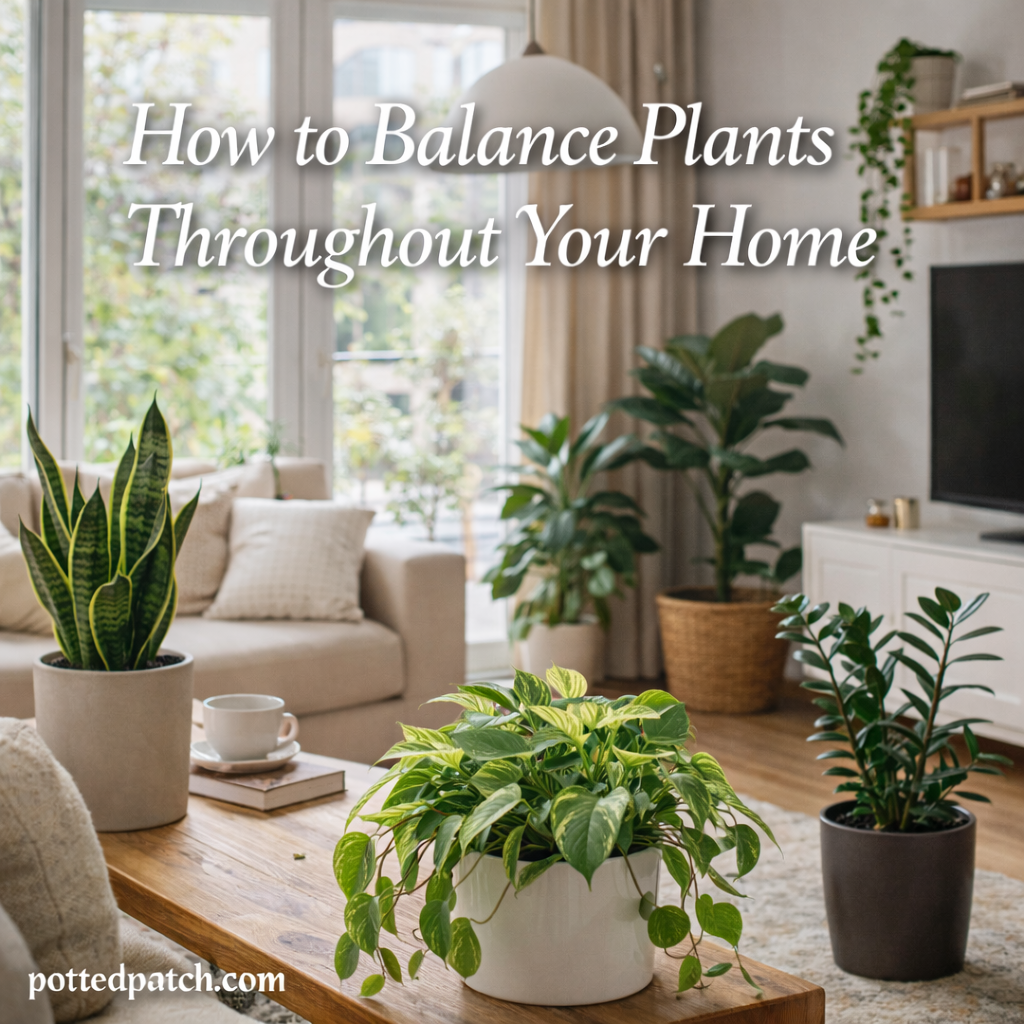
Balance Plants Across the Room
Avoid placing all your plants in one corner unless that’s a deliberate design choice.
Instead:
- Spread plants across multiple walls
- Mirror weight visually from one side to the other
- Use smaller plants to balance a large grouping elsewhere
This keeps the room feeling cohesive.
Consider Traffic Flow and Daily Life
Plants should enhance the space, not block it.
Keep in mind:
- Walkways should stay clear
- Plants shouldn’t brush against doors
- Workspaces need elbow room
- Pets and kids may affect placement
Function always comes before aesthetics.
Rotate and Adjust Over Time
Plant arrangements aren’t permanent.
As plants grow:
- Rotate them for even light exposure
- Move fast growers to larger spaces
- Rebalance groups seasonally
- Remove plants that outgrow the room
Treat your arrangement as flexible, not fixed.
Common Arrangement Mistakes to Avoid
These small issues can throw off the whole look:
- Placing all plants at the same height
- Ignoring light differences
- Overcrowding for a “jungle” look too early
- Hiding beautiful plants behind others
- Forgetting to leave space for growth
Less is often more—especially in smaller rooms.
Final Thoughts
Arranging multiple plants in one room is about balance, not perfection. When you focus on light, height, spacing, and flow, your plants naturally fall into place. Start simple, adjust gradually, and let the room guide your decisions.
A well-arranged plant-filled room should feel calm, intentional, and alive—not overwhelming.