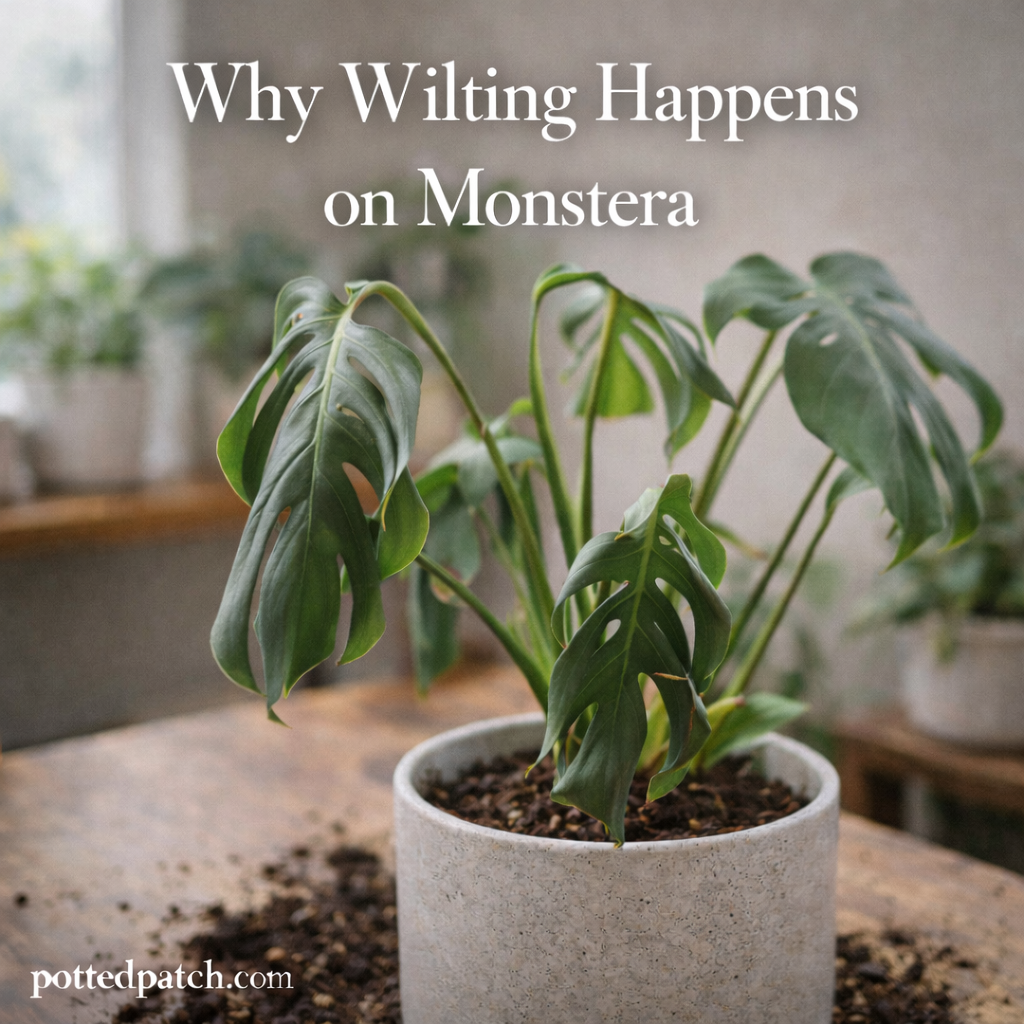
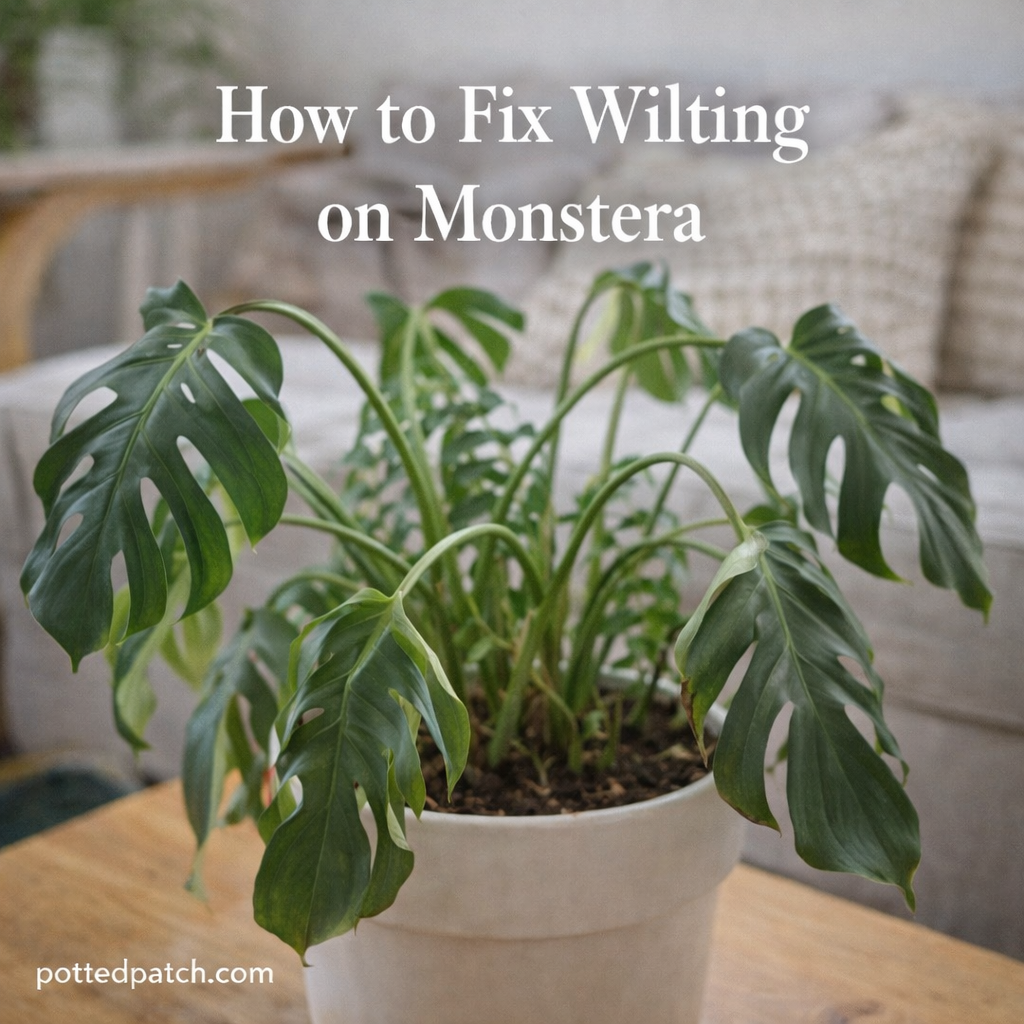
Seeing a Monstera wilt can be stressful, especially when it’s known for being a hardy, forgiving plant. Drooping leaves, limp stems, or a generally tired appearance are all signs that something in the plant’s environment is off.
The good news is that wilting is usually reversible once you identify the cause. This guide walks through the most common reasons Monsteras wilt and exactly how to fix each issue so your plant can recover and thrive again.
What Wilting Looks Like on Monstera
Wilting isn’t always dramatic. In many cases, it starts subtly and worsens over time.
Common signs include:
- Leaves drooping downward instead of holding shape
- Stems bending or leaning
- Leaves feeling soft or thin to the touch
- Overall loss of structure, even if leaves are still green
Wilting is different from yellowing or browning and usually points to water, root, or environmental stress.
Underwatering Is the Most Common Cause
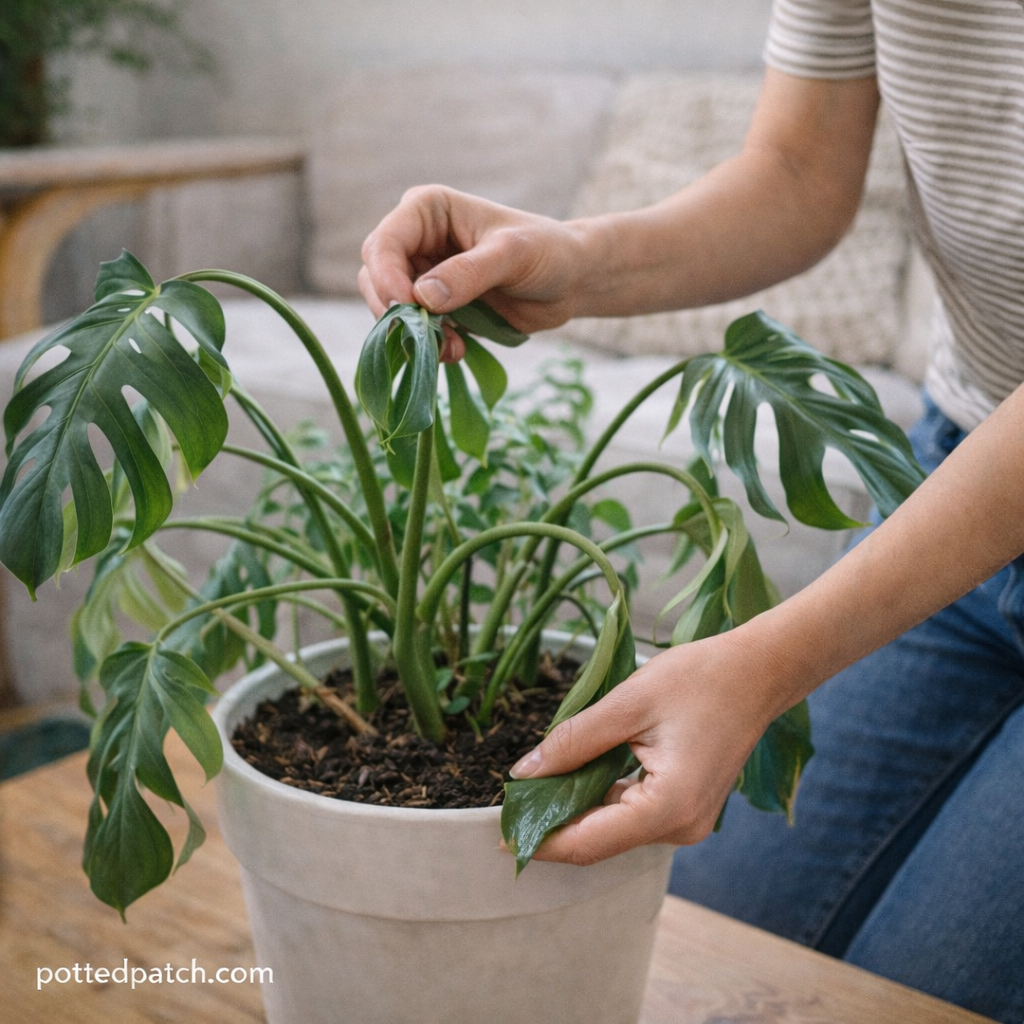
Despite fears of overwatering, underwatering is one of the top causes of wilting Monsteras.
When soil stays dry for too long:
- Roots can’t absorb enough moisture
- Leaves lose internal pressure
- The plant droops to conserve energy
How to Fix It
- Check the soil several inches down
- If it’s dry, water thoroughly until excess drains out
- Allow the plant to rehydrate over the next few hours
If underwatering was the issue, leaves often perk up within 24 hours.
Overwatering and Root Stress
Overwatering can also cause wilting, even though the soil is wet.
When roots sit in soggy soil:
- Oxygen can’t reach the roots
- Roots weaken or rot
- The plant can’t transport water properly
This creates wilting that doesn’t improve after watering.
How to Fix It
- Stop watering immediately
- Check that the pot has drainage holes
- Let the soil dry out before watering again
If wilting continues, the roots may need inspection and possibly repotting.
Poor Drainage or Compacted Soil
Even correct watering won’t help if water can’t move through the soil.
Poor drainage leads to:
- Waterlogged roots
- Root suffocation
- Persistent drooping
How to Fix It
- Repot into a container with drainage holes
- Use a well-aerated soil mix designed for houseplants
- Avoid packing soil too tightly
Monsteras prefer loose, breathable soil that allows both water and air to move freely.
Heat Stress and Sudden Temperature Changes
Wilting can happen quickly when a Monstera is exposed to heat stress.
Common causes include:
- Direct hot sunlight
- Placement near heaters or vents
- Sudden temperature drops
Extreme temperatures disrupt the plant’s ability to regulate moisture.
How to Fix It
- Move the plant away from heat sources
- Keep temperatures consistent between 65–80°F
- Use filtered or indirect light
Once temperature stress is resolved, the plant usually stabilizes within a few days.
Low Humidity Can Contribute to Wilting
While Monsteras adapt well to indoor conditions, very dry air can worsen wilting.
Low humidity may cause:
- Faster moisture loss from leaves
- Curling or soft drooping foliage
How to Fix It
- Group plants together
- Place the plant in a naturally humid room
- Use a shallow tray with water nearby
Even small humidity improvements can help restore leaf firmness.
Root Bound Plants and Wilting
A Monstera that’s outgrown its pot may wilt despite proper watering.
When roots are crowded:
- Water moves through too quickly
- Roots struggle to absorb moisture
- Growth slows and leaves droop
How to Fix It
- Check for roots circling the pot bottom
- Repot into a container one size larger
- Refresh soil during repotting
This often leads to noticeable improvement within a few weeks.
When Wilting Means Multiple Issues
Sometimes wilting isn’t caused by just one problem.
For example:
- Overwatering combined with poor drainage
- Heat stress plus low humidity
- Root binding and inconsistent watering
In these cases, addressing one issue helps, but full recovery requires adjusting multiple factors.
How Long Recovery Takes
Wilting recovery depends on the cause and severity.
- Mild underwatering: 12–24 hours
- Environmental stress: a few days
- Root-related issues: 2–4 weeks
New growth is the best sign your Monstera is back on track.
Focus on Consistent Care
Wilting is your Monstera’s way of signaling imbalance, not failure.
By maintaining:
- Consistent watering habits
- Proper drainage
- Stable temperature and light
You create an environment where wilting is far less likely to return.
With a few thoughtful adjustments, most Monsteras bounce back stronger and healthier than before.