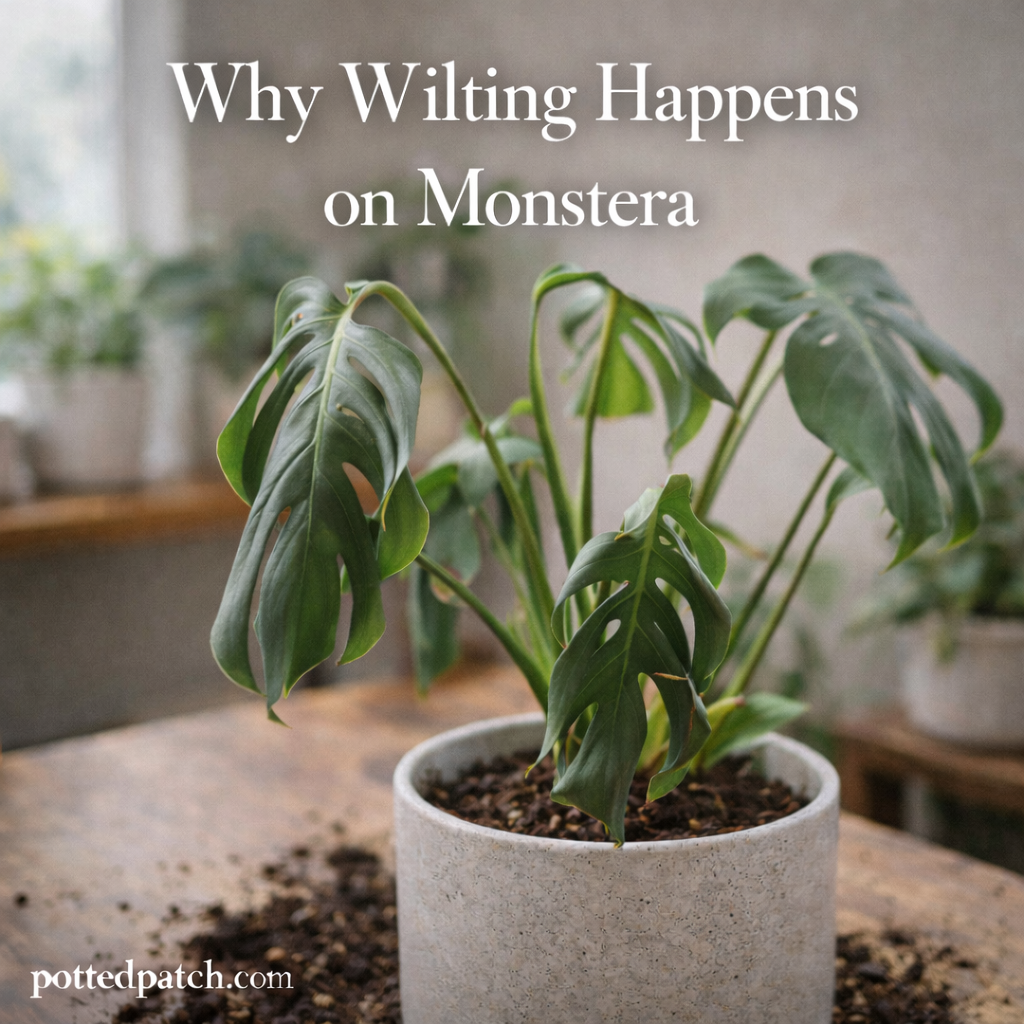
A wilting Monstera can be alarming—especially when the leaves look soft, droopy, or lifeless. Wilting is the plant’s way of signaling stress, and while it often looks dramatic, the cause is usually fixable once you know what to look for.
This guide explains why wilting happens on Monstera plants, the most common causes, and how to correct each issue so your plant can recover.
What Wilting Looks Like on a Monstera
Wilting doesn’t always mean the same thing for every plant.
Common signs include:
- Leaves drooping downward instead of standing firm
- Stems bending or leaning
- Leaves feeling soft, thin, or limp
- Overall loss of structure, even if leaves are still green
The key is identifying what’s causing the loss of water pressure inside the plant.
The Most Common Reasons Monstera Leaves Wilt
Underwatering
This is the most frequent cause of wilting.
Why it happens:
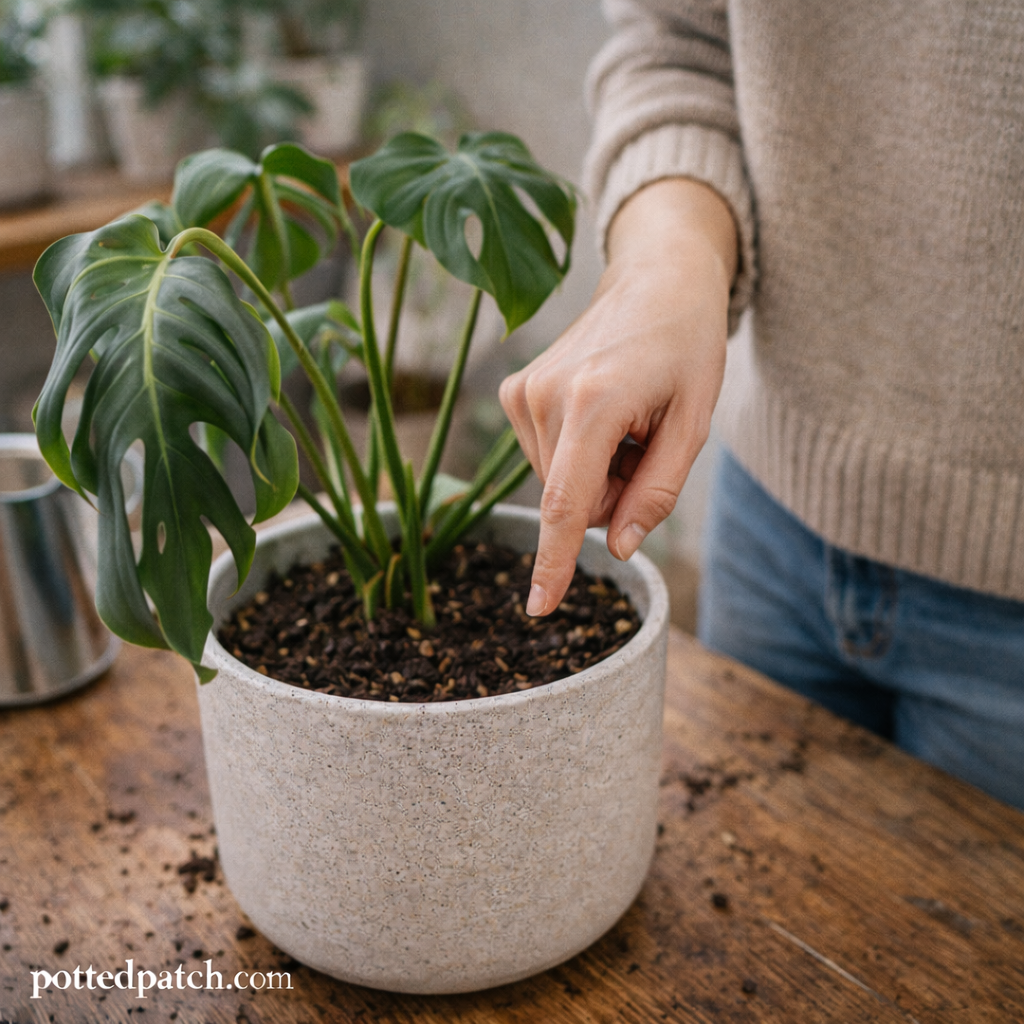
- Soil has dried out completely
- Roots can’t absorb enough moisture
- Leaves lose internal pressure
Signs it’s underwatering:
- Dry, lightweight soil
- Leaves feel thin or papery
- Wilting improves quickly after watering
Fix:
- Water thoroughly until excess drains out
- Resume a consistent watering routine
- Avoid letting soil dry out completely for long periods
Overwatering and Root Stress
Too much water can cause wilting just as easily as too little.
Why it happens:
- Roots suffocate in soggy soil
- Oxygen can’t reach the roots
- Water uptake becomes inefficient
Signs it’s overwatering:
- Soil stays wet for days
- Yellowing leaves alongside wilting
- Musty or sour soil smell
Fix:
- Let soil dry partially before watering again
- Ensure the pot has drainage holes
- Consider repotting if soil is compacted
Rootbound Plants
When roots run out of space, water movement becomes restricted.
Why it causes wilting:
- Roots circle tightly and can’t absorb moisture evenly
- Water drains too quickly through crowded soil
Signs:
- Roots growing out of drainage holes
- Soil drying out very fast
- Slower growth with wilting leaves
Fix:
- Repot into a container 1–2 inches larger
- Refresh soil with a well-draining mix
Heat Stress
Monsteras dislike extreme heat.
Why it causes wilting:
- Leaves lose moisture faster than roots can replace it
- Transpiration increases rapidly
Common heat sources:
- Direct sunlight
- Heat vents or radiators
- Hot summer windows
Fix:
- Move plant to bright, indirect light
- Keep it away from heat sources
- Increase airflow without drafts
Low Humidity
Monsteras are tropical plants that prefer moderate humidity.
Why it causes wilting:
- Leaves lose moisture faster in dry air
- Edges and tips weaken first
Signs:
- Wilting with crispy edges
- Dry indoor air, especially in winter
Fix:
- Group plants together
- Use a humidifier nearby
- Mist lightly if humidity is very low
Transplant Shock
Wilting often happens after repotting.
Why it happens:
- Roots are disturbed
- Water uptake pauses temporarily
Signs:
- Wilting within days of repotting
- Leaves remain green but droopy
Fix:
- Keep soil lightly moist
- Avoid fertilizing for several weeks
- Give the plant time to adjust
How to Diagnose the Cause of Wilting
Use this quick checklist:
- Check soil moisture with your finger
- Inspect drainage and pot size
- Look for temperature or light changes
- Consider recent repotting or movement
- Examine roots if problems persist
Wilting is usually caused by one main issue, not multiple at once.
What Not to Do When a Monstera Wilts
Avoid these common reactions:
- Watering repeatedly without checking soil
- Moving the plant constantly
- Fertilizing to “boost” recovery
- Pruning heavily during stress
Too much intervention often makes wilting worse.
How Long Does It Take a Wilting Monstera to Recover?
Recovery time depends on the cause.
- Underwatering: often improves within hours
- Overwatering: several days to weeks
- Rootbound or repotting stress: 1–3 weeks
As long as stems and roots are healthy, recovery is very likely.
Preventing Future Wilting
- Water based on soil dryness, not a schedule
- Use well-draining soil and pots with drainage
- Keep plants in stable light and temperature
- Repot before roots become severely crowded
Consistency is more important than perfection.
Final Thoughts on Monstera Wilting
Wilting on a Monstera is a stress signal—not a death sentence. Once you identify whether the issue is water, roots, environment, or recent changes, the fix is usually straightforward. With proper care and patience, most Monsteras bounce back quickly and return to their upright, healthy form.