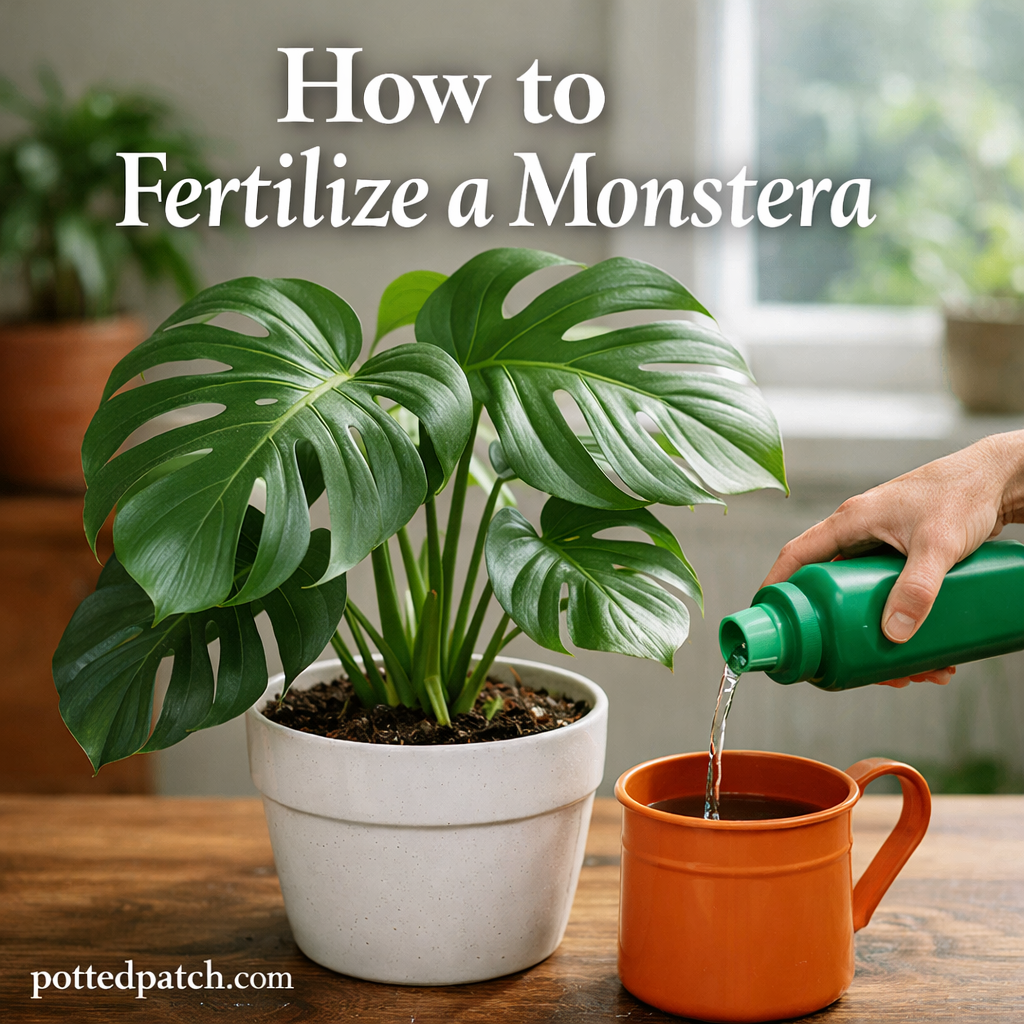
Monsteras are fast-growing, dramatic houseplants—but they don’t thrive on light and water alone. Proper fertilization plays a big role in leaf size, color, and overall growth. The key is knowing when, how, and how much to feed without overdoing it.
This guide walks you through everything you need to know to fertilize a Monstera safely and effectively, whether yours is a young plant or a mature statement piece.
Why Fertilizing a Monstera Matters
In their natural habitat, Monsteras grow in nutrient-rich forest soil where organic matter is constantly breaking down. In pots, nutrients get used up quickly and must be replaced manually.
Proper fertilization helps:
- Encourage larger, more fenestrated leaves
- Maintain deep green color
- Support strong root and stem growth
- Speed up healthy, controlled growth
Without fertilizer, Monsteras often survive—but they won’t truly thrive.
When to Fertilize a Monstera
Timing is just as important as the fertilizer itself.
Active Growing Season (Spring and Summer)
This is when your Monstera needs nutrients most.
- Fertilize every 2–4 weeks
- Growth is visible and rapid
- Leaves are actively unfurling
Slower Growth Period (Fall)
- Reduce feeding to once every 6–8 weeks
- Watch for slowing leaf production
Dormant Season (Winter)
- Do not fertilize
- Growth slows or stops entirely
- Feeding now can cause root stress or salt buildup
If your Monstera is still growing under strong grow lights, very light feeding may be acceptable—but it’s optional, not required.
Best Type of Fertilizer for Monstera Plants
Monsteras prefer balanced, gentle nutrition rather than heavy feeding.
Liquid Fertilizer (Best Overall Choice)
- Fast-acting and easy to control
- Ideal for container-grown plants
- Allows precise dilution
Look for a balanced formula, such as:
- 10-10-10
- 20-20-20
- 3-1-2 ratio designed for foliage plants
Always dilute more than the label recommends.
Slow-Release Granules
- Feed gradually over 2–3 months
- Convenient but less adjustable
- Risk of overfeeding if soil dries out
Best used sparingly and only during active growth.
Organic Fertilizers
Examples include:
- Worm castings
- Fish emulsion
- Seaweed extract
Pros:
- Gentle and soil-friendly
- Lower risk of fertilizer burn
Cons:
- Slower results
- Strong odors (especially fish-based options)
How to Fertilize a Monstera (Step-by-Step)
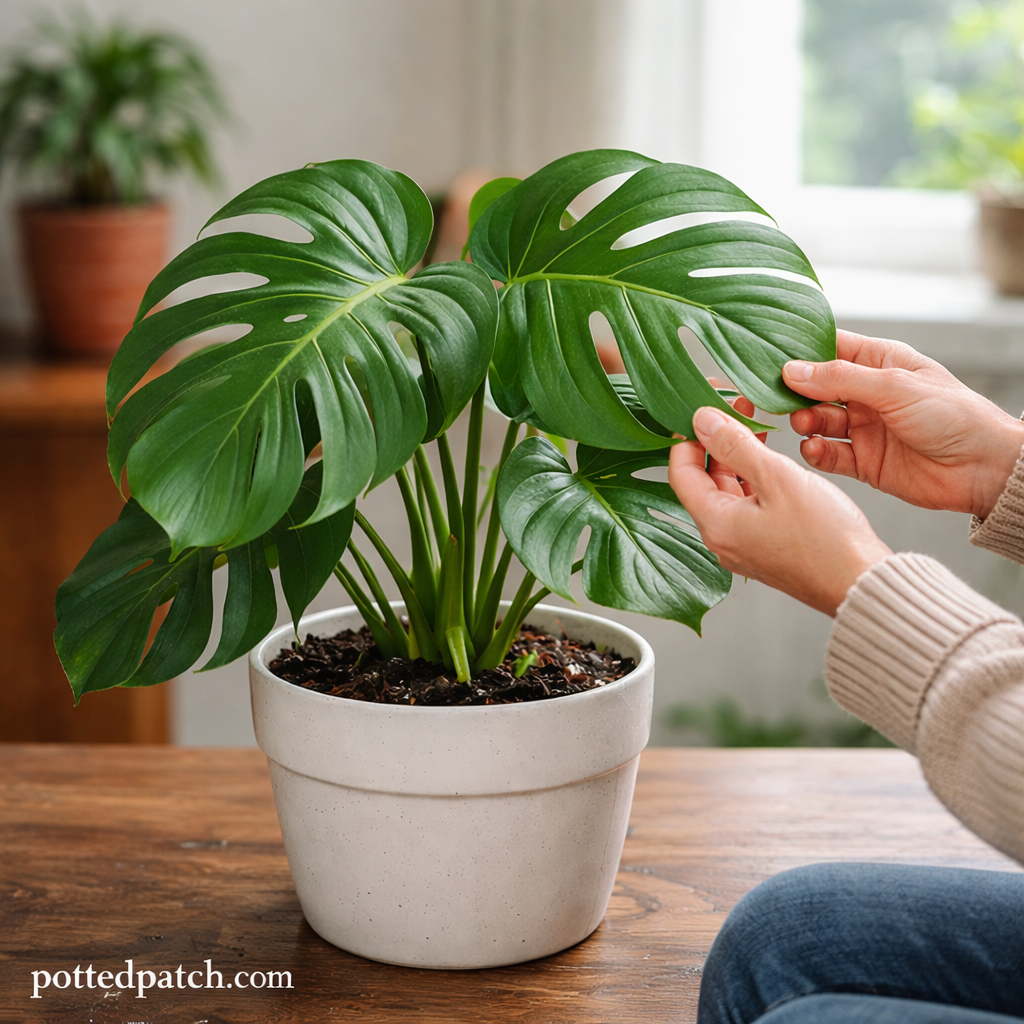
Step 1: Water First
Never fertilize dry soil.
- Water your Monstera thoroughly
- Wait 10–15 minutes before feeding
This protects roots from nutrient shock.
Step 2: Dilute the Fertilizer
- Use ½ strength of the recommended dosage
- For sensitive or young plants, use ¼ strength
More fertilizer does not mean faster growth.
Step 3: Apply Evenly
- Pour slowly around the soil surface
- Avoid splashing leaves or stems
- Let excess drain freely from the pot
Never allow fertilizer solution to pool in the saucer.
Step 4: Resume Normal Care
- Return plant to its usual location
- Do not fertilize again for at least 2–4 weeks
How Often to Fertilize a Monstera
General schedule for most indoor Monsteras:
- Spring–Summer: every 3–4 weeks
- Fall: every 6–8 weeks
- Winter: not at all
If you repotted recently with fresh soil, wait 4–6 weeks before fertilizing.
Signs Your Monstera Needs Fertilizer
- New leaves are smaller than older ones
- Pale or light green foliage
- Slow or stalled growth during spring or summer
- Long gaps between new leaves
If light, watering, and temperature are all correct, nutrition is often the missing piece.
Signs of Over-Fertilizing
Overfeeding is more harmful than underfeeding.
Watch for:
- Brown or crispy leaf edges
- Yellowing lower leaves
- White crust on soil surface
- Wilting despite moist soil
If this happens:
- Stop fertilizing immediately
- Flush soil with distilled water
- Resume feeding at a lower strength after recovery
Fertilizing Young vs. Mature Monsteras
Young Plants
- Fertilize lightly
- Use ¼–½ strength
- Focus on root and leaf development
Mature Plants
- Can tolerate regular feeding
- Benefit from consistent nutrition
- Support larger leaves and thicker stems
Common Fertilizing Mistakes to Avoid
- Fertilizing in winter
- Using full-strength fertilizer
- Feeding dry soil
- Mixing multiple fertilizers
- Assuming yellow leaves always mean nutrient deficiency
Monsteras are forgiving—but repeated mistakes can slow growth for months.
Final Thoughts on Fertilizing Monsteras
Fertilizing a Monstera doesn’t need to be complicated. With the right timing, a balanced fertilizer, and a gentle approach, you’ll see stronger growth, richer color, and larger leaves over time.
When in doubt, feed less—not more. A well-fed Monstera grows steadily, not explosively.