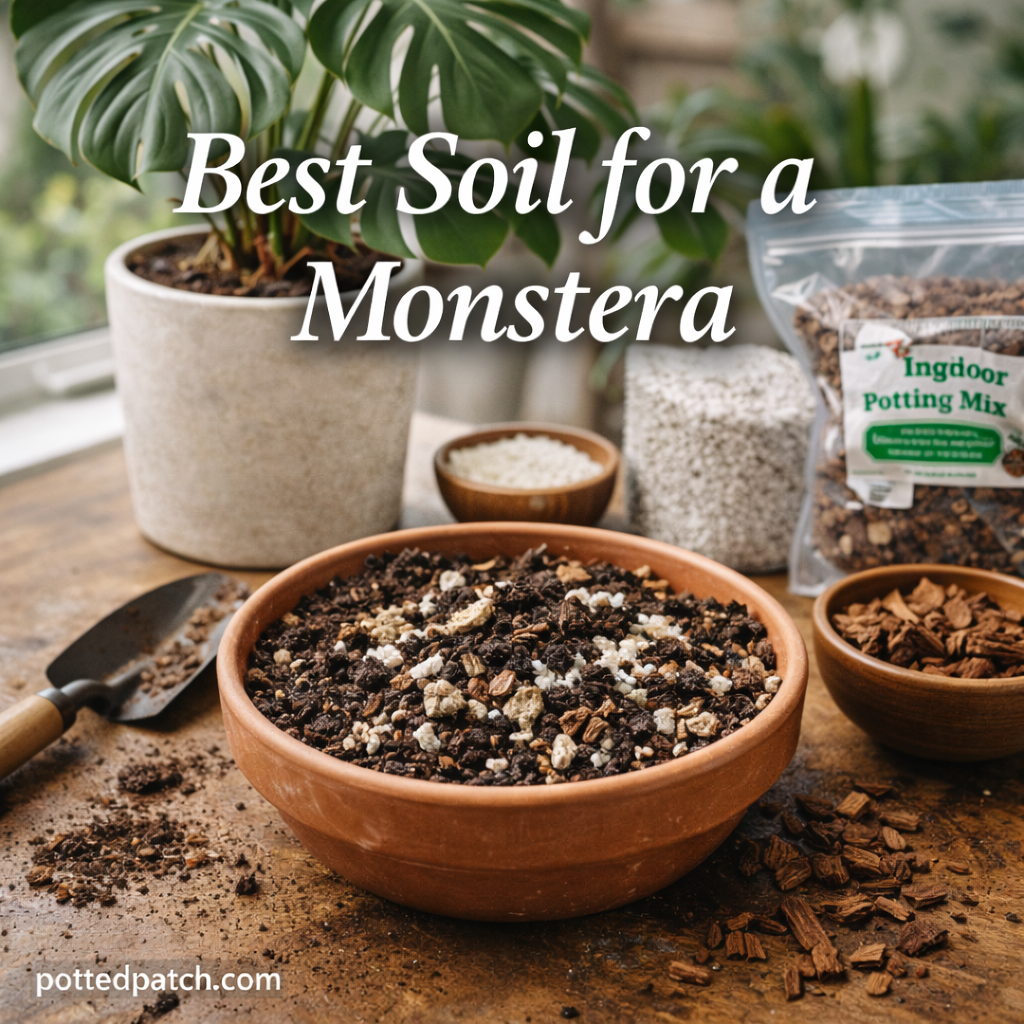
Monstera plants are known for their bold leaves and fast growth, but none of that happens without the right soil. Even with perfect light and watering habits, poor soil can lead to slow growth, yellowing leaves, or root rot. Choosing the best soil for a Monstera is one of the most important decisions you can make for long-term plant health.
This guide explains exactly what Monstera soil needs, what to avoid, and how to create the ideal mix for strong roots and steady growth.
Why Soil Matters So Much for Monsteras
Monsteras are tropical plants that naturally grow in loose, airy forest soil. Their roots need oxygen just as much as they need moisture.
The wrong soil can:
- Hold too much water and suffocate roots
- Compact over time and block airflow
- Drain too quickly and dry out the plant
The right soil creates balance—holding moisture while still draining well and allowing roots to breathe.
Key Characteristics of the Best Monstera Soil
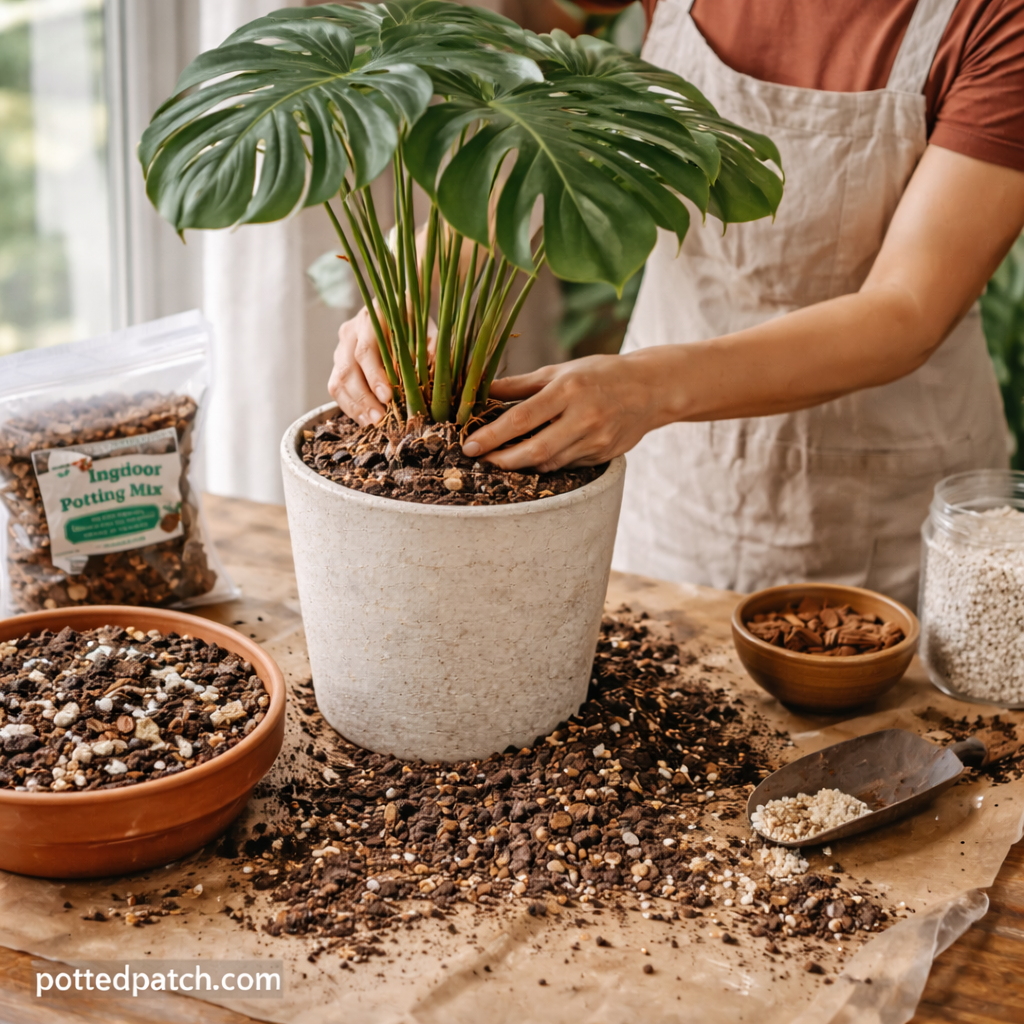
Before choosing or mixing soil, focus on these core traits.
Well-Draining
Monstera roots hate sitting in water. Soil should allow excess moisture to flow out easily after watering.
Light and Airy
Roots need oxygen. A loose soil structure prevents compaction and promotes healthy root expansion.
Moisture-Retentive (But Not Soggy)
Soil should hold enough moisture to hydrate roots between waterings without staying wet.
Nutrient-Rich
Monsteras are moderate feeders and benefit from organic matter in the soil.
Best Store-Bought Soil Options
You don’t need specialty Monstera soil, but some options work better than others.
High-Quality Indoor Potting Mix
A standard indoor potting mix can work if it’s light and not peat-heavy.
Look for mixes labeled:
- Indoor plant soil
- Tropical plant mix
- Aroid-friendly soil
Avoid dense garden soil or outdoor mixes—they compact too easily indoors.
Ideal DIY Monstera Soil Mix
For the best results, many plant owners prefer mixing their own soil.
Simple and Effective Monstera Soil Recipe
- 50% indoor potting soil
- 25% orchid bark or pine bark fines
- 25% perlite or pumice
This blend mimics a Monstera’s natural growing environment and works well for most homes.
Optional Add-Ins for Extra Benefits
These additions aren’t required but can improve soil performance.
Helpful Soil Amendments
- Coconut coir: Improves moisture balance
- Worm castings: Adds gentle nutrients
- Activated charcoal: Helps with odor and drainage
Use these in small amounts to avoid altering drainage too much.
Soil Types to Avoid for Monsteras
Some soils cause more harm than good.
Avoid These
- Heavy garden soil
- Straight peat moss
- Cactus soil alone (too fast-draining)
- Soil without added aeration
Dense or overly dry soil leads to stressed roots and uneven watering.
How Soil Affects Watering
Soil choice directly impacts how often you water.
- Well-draining soil = less risk of root rot
- Compact soil = waterlogged roots
- Fast-draining soil = more frequent watering
Always adjust watering habits after changing soil.
When to Refresh or Replace Soil
Even the best soil breaks down over time.
Signs It’s Time to Change Soil
- Water sits on top instead of soaking in
- Soil dries unevenly
- Roots circle the pot tightly
- Growth slows despite good care
Most Monsteras benefit from fresh soil every 1–2 years.
Soil Depth and Pot Considerations
Soil works best when paired with the right container.
- Always use pots with drainage holes
- Choose pots only 1–2 inches larger when repotting
- Avoid overly deep pots that trap moisture
Good soil can’t compensate for poor drainage.
Common Soil Mistakes
Avoid these frequent issues that affect Monstera health.
- Using soil straight from the garden
- Packing soil too tightly into the pot
- Ignoring drainage holes
- Reusing old, compacted soil
Loose, fresh soil is always better than “making do.”
Final Thoughts
The best soil for a Monstera is light, airy, and well-draining, with just enough moisture retention to support steady growth. Whether you choose a quality store-bought mix or create your own blend, the goal is the same: healthy roots that can breathe, grow, and absorb nutrients efficiently.
Get the soil right, and your Monstera will reward you with stronger stems, larger leaves, and long-term resilience.